The Best Speakers We've Ever Heard Cost $99 (Part 2)
A while back, I made the mistake of comparing my old Polk TSi100 bookshelf speakers against much more expensive speakers. Somehow, my cheap speakers won. Now it's time for round two.
New AI software can now create incredibly accurate video from still images, and the Real Estate video market is about to change forever.
Every January, the trend forecasts roll in. And every year for at least the last five, "authenticity" has appeared somewhere on the list, wedged between AI predictions and whatever retro aesthetic is cycling back. By now, it would be reasonable to dismiss it as an empty buzzword, the kind of thing that sounds important in a webinar and means nothing in practice.
Most of us know that shooting in a flat log picture profile will give you the highest quality video footage but the workflow has always been too difficult to deal with. I've created Fstoppers' LUTs for Sony cameras and a shooting and editing workflow that changes everything.
I set out to photograph and light paint a mysterious, dilapidated homestead cabin in the Mojave Desert under moonlight. With nothing more than a flashlight and a single long exposure, I turned it into a glowing, cinematic scene. Here's exactly how I did it, and how you can too.
Your camera has image stabilization. Your lens might, too. You also have a shutter speed dial that goes up to 1/8,000 of a second. Both of these tools fight blur, but they fight different kinds of blur, and mixing them up is one of the most common mistakes beginners make.
For roughly a decade between 2013 and 2023, Sony defined where the camera industry was going. The original a7 and a7R democratized full frame mirrorless and forced Canon and Nikon to abandon their DSLR-protective hesitation. The a9 line proved electronic shutters could compete with mechanical at the highest level of professional sports. The opening of the E mount to third-party manufacturers reshaped the lens economy across every competing system. Sony was the brand that other manufacturers reacted to, and the photography press treated Sony announcements as bellwethers for where the industry would move next. Working photographers debated which a7 variant to buy because the relevant comparisons were among Sony's own bodies.
While overhyping new filmmaking and photography products is something of a spectator sport and phrases like "game changer" seem to be bandied about on a daily basis, it can sometimes come as a surprise which products actually move the needle.
For roughly twenty years, the working photographer's purchase logic was simple. The flagship body was the right answer for demanding work, and the mid-range body was the right answer for everything else. Working pros bought flagships because their work demanded it. Wedding photographers shooting in dim churches, photojournalists in unpredictable conditions, sports photographers tracking fast subjects, wildlife photographers waiting for a single decisive moment, commercial photographers needing absolute reliability across long shoot days. All of them needed something the mid-range bodies could not deliver, and the flagship was where that something lived.
In the age of being able to take care of a lot of production needs with AI, are professional models becoming irrelevant? And even beyond AI, why is using a professional model such a necessity for professional photo shoots, especially in the fashion space?
The 24-70mm f/2.8 has been the default first professional lens purchase for at least 25 years. Almost every working photographer has owned one. Every photography forum recommends one to every newcomer asking what to buy after the kit lens. Every wedding educator names it as the foundation of a working kit. Every camera store stocks it at eye level. The lens has been so culturally dominant within working photography that the question of whether it should still be the default has rarely been asked seriously. It should be asked now.
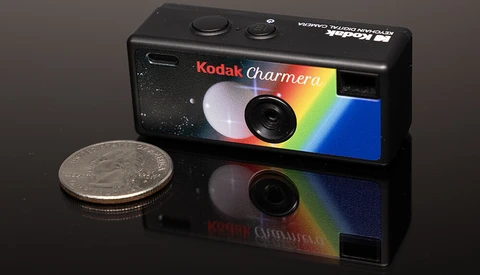
If you dream of owning a Hasselblad XPan, you might want to consider this much more affordable alternative. Or, given how stupid it is, maybe not.
The biggest hurdle many photographers face when jumping into off-camera flash isn't the gear or the settings; it's the "where." We often find ourselves in a beautiful location with boring light, and we struggle to know how to fix the issue. If you've ever looked at a scene and felt stuck because the lighting didn't match your vision, the solution isn't more gear. The solution is learning how to "see" light patterns and then recreating them from scratch.
More cameras, fewer photographers. As this new day dawns outside my window, I pose a simple yet profound question: Is there still truth in photography?
As with every fast-paced, tech-driven industry, the cycle time for each incremental update in photography equipment seems to get shorter and shorter. Though it has become better for the past few years, each product launch is still not given sufficient time to mature before the next iteration is shoved down our throats. While this might contribute to a better-looking balance sheet from a business standpoint, in the long run, it might lead to a massive disconnect between what camera manufacturers are building and what the market actually demands.
Photography has spent most of its digital era chasing technical perfection. Sharp focus, clean files, controlled lighting, smooth skin, perfect exposure across the dynamic range. The pursuit was reasonable. Each generation of cameras and editing software made these standards more achievable, and working photographers who failed to meet them risked looking unprofessional. By 2020, a wedding photographer delivering a slightly soft image was apologizing for it. A portrait photographer leaving visible skin texture was risking client complaints. The technical-perfection ceiling kept rising, and the industry kept rising with it.
There is a kind of photography that pretends to be neutral. Flat surfaces, clean lines, ordinary spaces. Nothing dramatic, nothing loud, nothing that asks to be looked at twice. It's often dismissed as cold, detached, even empty. But that reading is too easy. What we call indifference is rarely indifference. It is a position.
Most photographers will tell you the same thing: don't use a fisheye for portraits.
In March 2026, the National Republican Senatorial Committee released an online ad featuring a minute-long video of Democratic Senate candidate James Talarico speaking into the camera, reading statements the real Talarico had not spoken on camera. The Talarico in the video was generated entirely by artificial intelligence, voicing content drawn from the candidate's old social media posts. The words "AI Generated" appeared in small text in the corner of the frame at the start, then faded into even smaller text that remained on screen while the fake Talarico continued to speak.
Artificial intelligence has quickly become part of the workflow for many photographers. From culling thousands of images to automating complex edits, there's now a tool for almost every part of the process. But not all AI is built for the same job.
Most working photographers have a portfolio problem. The problem is not that the work is bad. The work is usually fine. The problem is that there is too much of it. Portfolios that should have 12 to 18 images contain 40 or 50 or 80. Websites that should load three galleries fast contain eight galleries that load slowly. Instagram grids intended to function as portfolios contain two years of inconsistent work that blurs the photographer's identity rather than sharpening it. The photographer has spent years building the portfolio and cannot bring themselves to remove anything from it.
Hunter S. Thompson is certainly one of my references — not because he ever cared about photography, but because he understood something most photographers avoid.
Most photographers put the camera away when it rains, but I believe this is a huge mistake. I've found that some of my best photos are made when it's raining, and I make the effort to embrace it. Let's talk about why.
Discover the art of minimalism in landscape photography and learn how the deliberate removal of distractions can elevate your images. Join me as I share insights from my recent trip to Namibia, highlighting the beauty and purpose behind each frame.