





Three Practical Ways To Capture Stronger Photos Every Time
Missing the decisive moment by seconds gets old fast. You start to wonder if the difference between an average frame and a standout image is just luck.
You keep hearing that a 50mm f/1.8 on full frame gives a look that smaller sensors cannot match. That might be true, but it misses the point when your goal is depth, not blur.
The Canon R8 is not new, and the Canon RF 45mm f/1.2 arrived with mixed reactions. Yet this pairing keeps showing up as a favorite for travel and portraits when size and weight actually matter.
Metallic paper can turn a flat-looking deep-sky file into something with depth and bite. If you care about how your astronomical images look on paper instead of just on a screen, the choices you make before hitting print decide whether the stars glow or fall dull.
Fujifilm occupies a unique position in the camera market. While Canon, Nikon, and Sony battle for full frame dominance, Fujifilm has charted its own course: a mature APS-C system beloved by enthusiasts and professionals alike, plus a medium format lineup that brings large sensor photography to a broader audience than ever before. For photographers entering Fujifilm's world in 2026, the lens ecosystem can seem deceptively simple at first glance, but there's more nuance hiding beneath the surface than you might expect. Understanding the difference between XF and XC, decoding all those suffix letters, and knowing how the X-mount and G-mount systems relate to each other will help you make smarter buying decisions and build a kit that truly serves your needs.
The Canon EOS R6 Mark III steps into a crowded full frame market with a 32-megapixel sensor and internal 7K open gate recording. If you shoot both stills and video, this body lands right where detail, file size, and real-world handling collide.
Light gets all the attention, but composition decides whether the image works. You can have stunning light and still end up with a weak frame.
Soft contrast can change the mood of a landscape without making it look flat or faded. When you control it well, you keep detail in the highlights and shadows while giving the scene a gentle glow that feels natural.
Choosing between the Tamron 35-100mm f/2.8 Di III VXD and the Nikon NIKKOR Z 24-120mm f/4 S comes down to tradeoffs that show up the moment you start shooting. The differences in reach, aperture, and handling shape how you work in travel, portraits, and day-to-day carry.
The Canon EF 70-200mm f/2.8L IS III USM sits at the end of Canon’s DSLR era, and it still tempts anyone who wants reach, speed, and flexibility in one lens. If you use a Canon body, especially mirrorless, the question is simple: should you adapt this classic and save money, or move to RF and carry less weight?
The Sony 16-35mm f/2.8 GM II promises better sharpness, lighter weight, and faster autofocus than the original. When a lens costs $2,300, those claims need to show up in real use, not just on a spec sheet.
Heading out with a camera in heavy rain feels reckless, especially near the coast with wind strong enough to shake a tripod. Yet those are the days when light turns moody, water comes alive, and ordinary locations shift into something raw and dramatic.
Photography changes more than your images. It shifts how you move through the day, how you solve problems, and how you handle setbacks.
Modern cameras are extraordinary machines. They meter light with near-perfect accuracy, track subjects across the frame in real time, and recover detail from shadows that would have been pure black a decade ago. But all of that capability comes with a side effect that almost nobody talks about: your camera is quietly shaping the way you see, the way you decide, and the way you feel about your own photographs. It is not a neutral tool. It has preferences, and over time, those preferences become yours. The question worth asking is whether the photographer you are becoming is the one you actually want to be, or the one your camera has gently trained you to be.
Nikon shooters face a unique challenge that Canon and Sony users simply don't encounter: a lens ecosystem so sprawling and historically layered that even longtime Nikon photographers routinely get confused about what works with what. Here's everything you need to know.
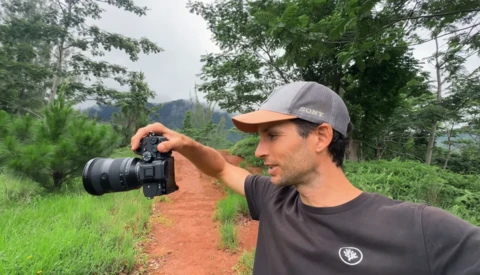
The 24-70mm lens is one of the most used focal ranges in photography, yet it often feels flat and uninspiring. That frustration usually has less to do with the lens and more to do with how you’re standing when you use it.
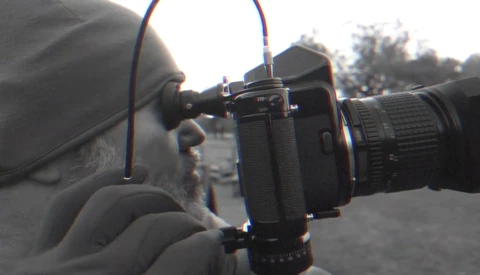
The Graflex K-4 is a 1950s military rangefinder built for 70mm film, and it is as intimidating as it sounds.
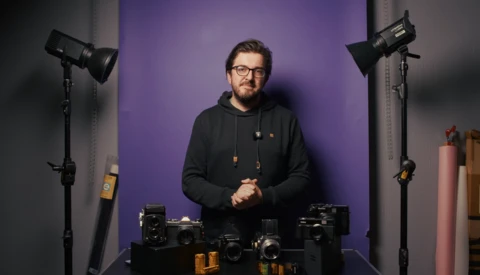
You don’t need a shelf full of cameras to make strong images, yet it’s easy to end up with one. The real question isn’t which model is best, but why you own what you own.
A 200mm f/2 lens is not subtle. It is big, bright, and built for reach, speed, and real subject separation when light drops or backgrounds get busy.
The Tamron 35-100mm f/2.8 steps into a space that many overlook, covering a range that makes sense for portraits, events, and travel without the bulk of longer zooms. If you carry gear for hours or move fast on location, weight and balance stop being small details and start shaping how you shoot.
Most photographers approach lens purchases with a familiar mental checklist. They identify a problem, usually something technical, and then shop for a solution. The logic seems airtight: if the images aren't sharp enough, buy a sharper lens. If the background blur isn't creamy enough, buy something with a wider aperture. If the autofocus hunts too often, upgrade to the newest generation with better motors and tracking algorithms. That's wrong.
Canon’s RF 28-70mm f/2.8 IS STM fills a gap that many ignore until they need it. If you’ve ever avoided a standard zoom because of weight, this lens quietly challenges that decision.
The idea that 12 megapixels is not enough has been repeated so often that you might accept it without testing it yourself. The Sony ZV-E1 challenges that assumption in a way that forces you to rethink how much resolution you actually need.
Tamron has announced the 35-100mm f/2.8 Di III VXD, a constant-aperture standard zoom lens for full frame Sony E-mount and Nikon Z-mount mirrorless cameras. The lens will be available on March 26, 2026, priced at $899 for the Sony E-mount version and $929 for the Nikon Z-mount version ($1,249 CAD and $1,299 CAD, respectively).
Memory cards are the most overlooked purchase decision in photography. We agonize over camera bodies for months, research lenses obsessively, and then grab whatever SD card is on sale at checkout. This approach works fine until you're shooting a wedding and your buffer locks up during the first dance, or you're recording an interview and the camera stops mid-sentence because your card couldn't keep up.
Commercial real estate photography is getting more serious, and agents are paying attention. If you already shoot residential listings, there’s a clear opening to step into higher-paying work without starting over.
Premiere Pro is no longer called Premiere Pro. With version 26.0, Adobe has renamed it Premiere on Desktop, and that shift comes with tools that could change how you handle masking, transitions, and overall timeline speed.
Full frame cameras dominate headlines, but APS-C models are quietly outselling them by a wide margin. Shipments in 2025 show a gap that challenges the idea that bigger sensors are the obvious end goal.
The analog photography revival is real. You can see it at every wedding reception with a disposable camera basket, every college campus where students dangle point-and-shoots from their wrists, every TikTok tutorial on how to load a roll of Kodak Gold. But if you follow the money instead of the aesthetics, you'll find two radically different stories unfolding under the same "film is back" umbrella.
The Nikon ZR promises cinema-level features in a body that overlaps heavily with the Nikon Z8, and that overlap raises a real question about what you’re actually gaining. If you shoot both photo and video, the choice affects how you work day to day, not just how your footage looks.
A strip softbox can change the way your portraits look with one small shift in light placement. If you shoot people and want more control over shape, edge highlights, and background spill, this modifier earns its place fast.
Southern Utah forces you to think bigger. When the land stretches for miles and the sky takes up half the frame, small compositional mistakes get exposed fast.
Clear communication shapes every part of your wedding business, from the first inquiry to the final gallery delivery. If you handle it poorly, you invite stress, missed bookings, and couples who expect access to you at all hours.
These aren't compromised relics from a forgotten era. They're the same tools that shot magazine covers, documented weddings, and produced professional video content when they retailed for two or three times what they cost today. The sensor inside a five-year-old camera hasn't degraded. The engineering hasn't gotten worse. These cameras have simply depreciated because photographers chase new releases with the enthusiasm of golden retrievers pursuing tennis balls, and that irrational behavior creates opportunity for everyone else.
Waterfall scenes look simple, but they fall apart fast when the eye has nowhere to go. If you want stronger landscape images, you need to think beyond the obvious front-on shot and start controlling flow, balance, and shutter speed.