





















































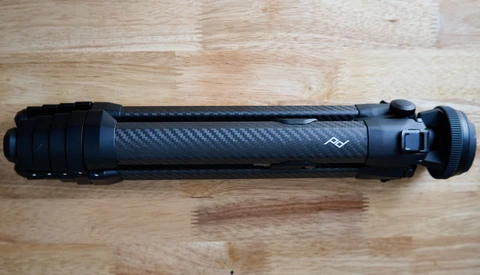
Reviewing The Peak Design Travel Tripod
Today, I wanted to take a break from discussing the cameras that capture our images and look at one of the tools used to make those images better. Let’s have a look at the Peak Design Travel Tripod.
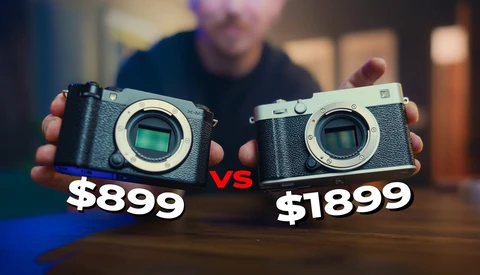
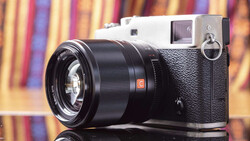
Open Gate or 40 Megapixels: Picking Between the X-M5 and X-E5
The Fujifilm X-M5 and X-E5 look like siblings, but the price gap between them runs about $1,000 and the experience of shooting each one splits along lines you might not expect. Deciding between an $800 body and one that often sells closer to $1,800 forces a question every buyer eventually faces: how much are premium build and resolution actually worth to you?
Latest Gear Reviews


Active Contests
Show us the work YOU wanted to do
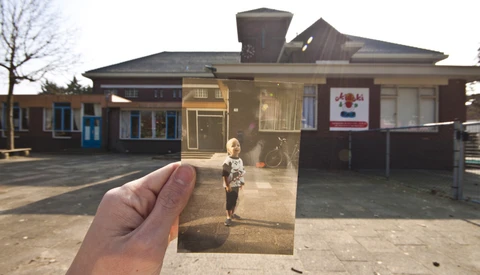
Welcome to the September installment of the Critique the Community! This month's critique theme is going to be "Passion Project," and we want to see your best photographs that come from a personal project.
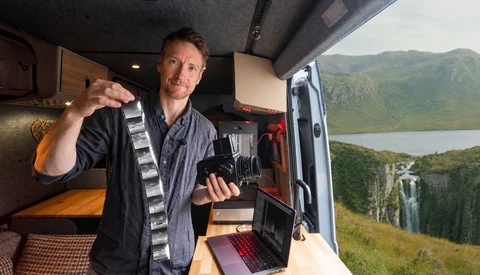
Shooting and Processing Black-and-White Film Off-Grid in Scotland
Shooting film is one thing. Developing and scanning it yourself, hundreds of miles from home, inside a van with blackout blinds and a couple of red lights, is a different level of commitment.
Fstoppers Exclusives

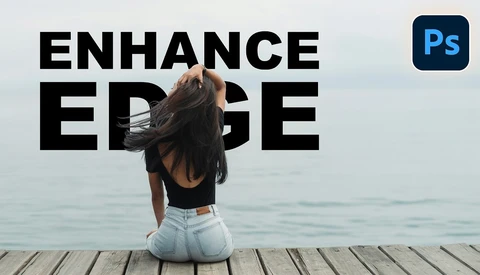
Photoshop's New Edge Tool Costs 20 Credits Every Time You Click It
Photoshop's beta build now includes a Refine Edge feature that cleans up the messy fringing left behind when you cut a subject out of one background and drop them onto another. Every click costs 20 generative credits, so the value depends on whether the result beats what you can do by hand.
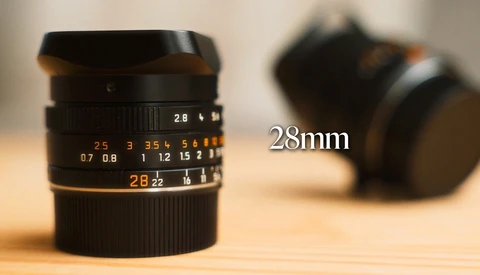
Why 28mm Beats 35mm for Honest Street Photography
Forced to sell every camera and lens and shoot a single focal length forever, plenty of street shooters would reach for 35mm because it handles almost anything. There's a strong case that the wider 28mm produces more interesting pictures, and the reasoning has less to do with sharpness and more to do with truth.
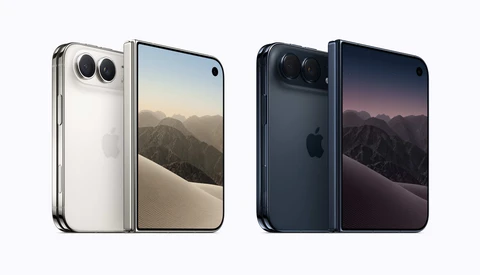
The $1,999 iPhone Duo Is Apple's First Foldable, and It Has Some Clever Camera Tricks
Apple has introduced the iPhone Duo, its first foldable iPhone, pairing a 5.4 in outer display with a 7.6 in folding inner display. Beyond the new form factor, the phone includes dual 48 MP rear cameras, 4K video recording at up to 120 fps, an A20 Pro processor, new photography features that take advantage of the second display, and an updated version of iOS designed around multitasking.

Inside the Mexican Suitcase: The Spanish Civil War Negatives Lost for 68 Years
In December 2007, three small cardboard boxes reached the International Center of Photography in New York holding 126 rolls of 35mm film and roughly 4,500 negatives that had been missing since 1939. Inside was a visual record centered on the Spanish Civil War as seen by Robert Capa, Gerda Taro, and David "Chim" Seymour, three young photographers who helped invent modern war reporting before all three of them were killed on assignment. The cache also holds several rolls of portraits of Capa and Taro made in Paris by a fourth photographer, Fred Stein, along with a few frames shot before the fighting started. The film had disappeared from a Paris darkroom and resurfaced nearly seven decades later in a Mexico City apartment, after a journey whose middle stages remain uncertain, and almost no one believed it still existed.
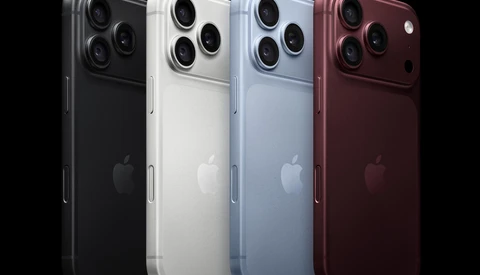
Apple Gives Photographers More Control With the iPhone 18 Pro
Apple has announced the iPhone 18 Pro and iPhone 18 Pro Max, introducing a new 48 MP Fusion Main camera with variable aperture, expanded manual camera controls, new image-authenticity features, and additional photo and video tools. The phones also introduce the A20 Pro chip, a redesigned thermal system, longer battery life, and iOS 27 with Apple Intelligence and Siri AI.
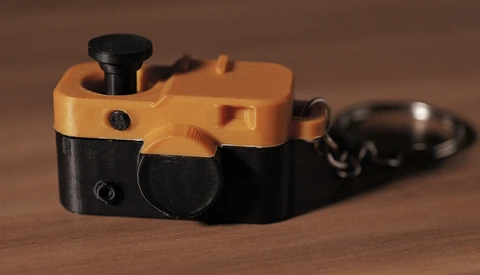
Useful Camera and Tech Accessories and Tools You Can 3D Print Yourself
Whether you do photography as a hobby or professionally, there are a lot of tools and accessories that make what we do easier, more convenient, or even more foolproof. Sometimes even the simplest tools can be instrumental in how we achieve our shots or, on the other hand, something equally important: how we take care of our camera gear. Whatever these tools are and no matter how simple, we often need to buy them from a physical store or an online source that will take a couple of days to ship. But with 3D printing now becoming more and more accessible, we can have those tools ready for use within a couple of hours. Here are some ideas for what you can print from the comfort of your own home.
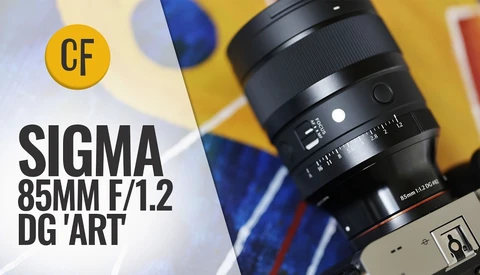
Sigma's 85mm f/1.2: Beautiful Bokeh, One Real Weakness
Sigma just released an 85mm f/1.2 DG Art for L-mount and Sony E-mount, and it lands at £1,299 in the UK or $1,599 in the US. That price sits well under Canon's and Nikon's mirrorless 85mm f/1.2 options, and the Sigma is smaller and lighter than both.
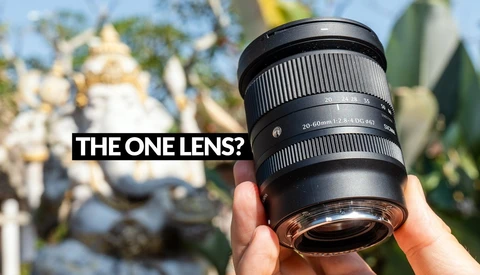
Can One 350-Gram Zoom Really Be Your Only Travel Lens?
Packing a single lens for a long trip means giving up options you might miss, and the Sigma 20-60mm f/2.8-4 makes that gamble easier to justify. The range covers wide landscapes, tight architecture, and portraits without a bag full of glass.
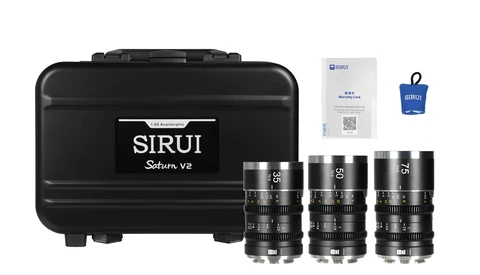
SIRUI Announces Saturn V2 Full-Frame Anamorphic Series with 90-Degree Rotation
SIRUI has officially announced the launch of the Saturn V2 Full Frame Anamorphic Lens Series, representing a significant update to its popular Saturn anamorphic system. Aimed at modern filmmakers and hybrid content creators, the new generation introduces a unique 90-degree rotating optical mechanism, allowing users to seamlessly transition between traditional horizontal cinematography and vertical shooting formats without needing to swap lenses or rebuild their camera rigs.
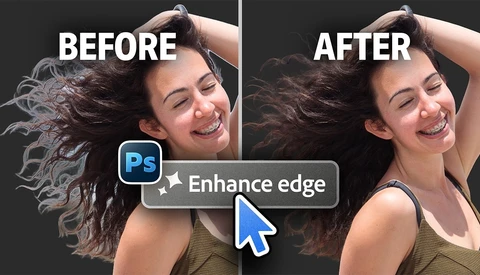
The Automatic Halo Fix in Photoshop, Tested on Real Hair
Photoshop's beta 27.11 introduces Enhance Edge, an AI feature that promises to erase the halos that show up when you drop a masked subject onto a contrasting background. Hair cutouts have frustrated retouchers for decades, and any tool that claims to solve them deserves a hard look before you trust it on real work.
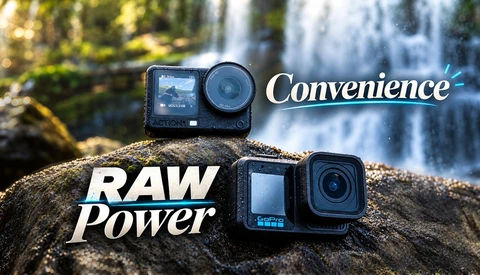
Two Action Cameras, $260 Apart: Which One Earns It
A 1-inch, 50-megapixel sensor, 8K open gate, and slow motion running past 900 frames per second sit on one side. A smaller sensor, a faster lens, and a $260 lower price sit on the other. That gap is the whole story, and deciding which camera wins depends less on the spec sheet than you'd expect.

OM System Revives the Legendary PEN Camera With an EVF, Weather Sealing, and 30 fps Shooting
OM Digital Solutions has announced the OM SYSTEM PEN, a new Micro Four Thirds interchangeable-lens camera built around a 20.4-megapixel Live MOS sensor, TruePic IX processor, 5-axis in-body image stabilization, and a compact rangefinder-style body. It is the first PEN-series camera released under the OM System brand, as well as the first model in the series to combine an electronic viewfinder with a dustproof and IPX1-rated splashproof design.
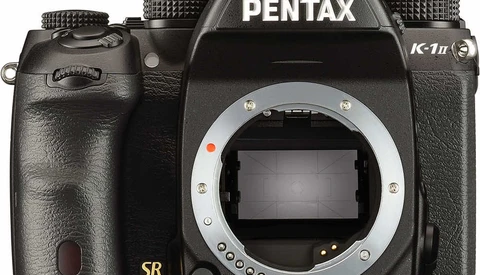
The Last DSLR Maker Just Discontinued Its Whole Lineup
Ricoh is ending production of its current Pentax K-series digital SLRs and starting work on a brand-new line built on what it calls an entirely new concept. The move retires the existing lineup while the company tries to reinvent what a DSLR can be.
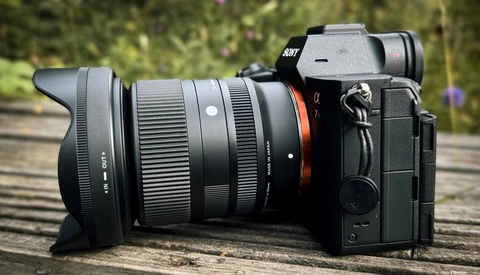
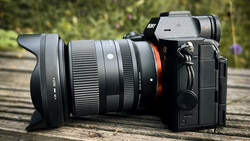
From 20mm to 60mm: I Test Sigma’s New Full Frame Compact All-Rounder
Sigma is adding an interesting new option to its full frame mirrorless standard zoom lineup: a lens that combines a 20mm wide angle starting point with a compact, lightweight design. The idea was to create a versatile zoom that can stay on the camera most of the time, reducing the need to carry multiple lenses or constantly stop to change them. That makes it particularly appealing for travel, hiking, street photography, and anyone who wants to keep their camera setup as light and mobile as possible.
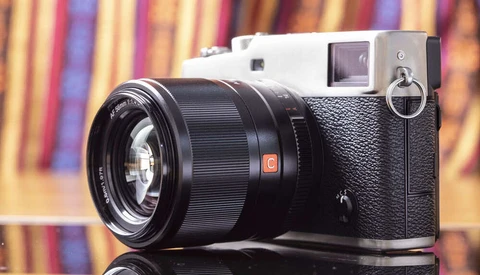
The Best Value Lens for Every Camera Mount You Can Buy Now
Every camera mount has one lens that makes the rest of the lineup look overpriced. It is rarely the flashiest piece of glass in the catalog, and it is almost never the one the marketing pushes hardest. What follows is the single best value in each major mount you can still buy new today, one pick apiece, from Canon RF through Leica M and the two medium format systems to the three DSLR mounts that refuse to die.

Finding a New Perspective With the Sigma 150-600mm f/5-6.3 DG DN OS Sports Lens
Certain pieces of photographic equipment make you rethink the way you photograph, and for me, the Sigma 150-600mm f/5-6.3 DG DN OS Sports lens was one of those lenses. I should probably start by admitting that wildlife photography isn't really my usual territory. I'm primarily a landscape photographer, and most of my photographic life has involved looking for dramatic mountains, interesting light, and compositions that don't move. Wildlife, or should I say in this instance local wildlife, by comparison, has always seemed like a rather different discipline. But spending time with Sigma's 150-600mm changed that.
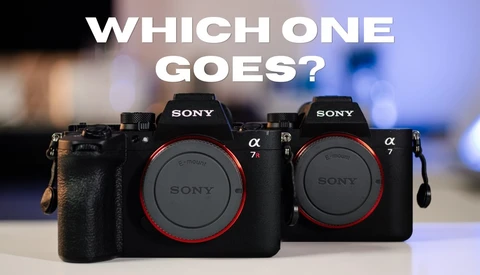
Double the Resolution, Same Image Quality? A Real Sony Test
A $1,600 price gap and double the resolution should settle which Sony camera wins on image quality. After a side-by-side test, the answer refuses to cooperate.
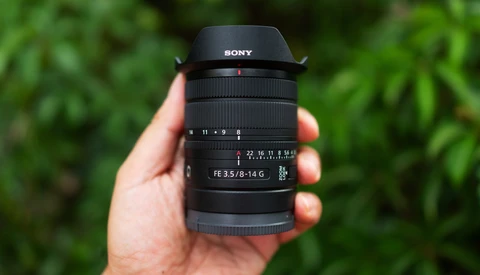
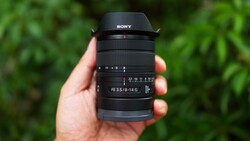
From Circular to Diagonal: Hands-On With the Sony FE 8-14mm F3.5 Fisheye G
What if you could replace your heaviest ultra-wide rig with a single, highly specialized piece of glass that fits in the palm of your hand?

Three Anchor Points to Kill Aperture Overthinking
Aperture stalls you in the field because you treat it as a math problem with dozens of correct answers. The same setting looks different across cameras, lenses, and shooting distances, so memorizing what each value produces is a losing bet.
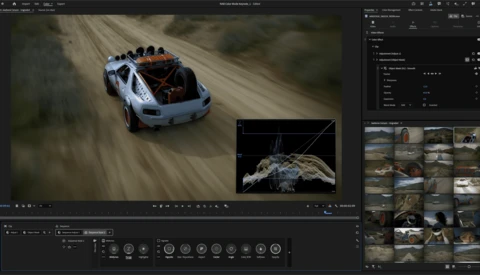
Adobe Adds Generative Video, Music, Smarter Audio, and an AI Assistant to Premiere and After Effects
Adobe has announced a substantial collection of AI-powered additions to Premiere and After Effects, with the updates focusing on generating media inside an edit, automating repetitive post-production work, improving audio cleanup, and expanding color-grading tools.
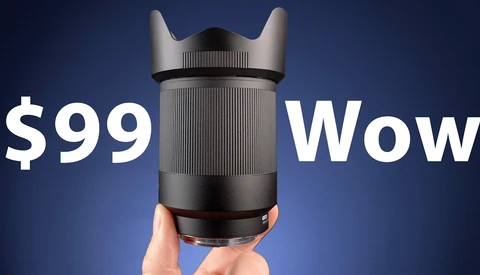
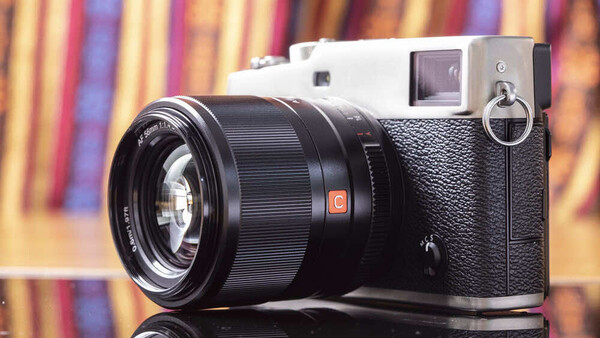
The Cheapest Autofocus 85mm You Can Buy, Tested Against a G Master
Put two portrait shots side by side, one taken with an $1,800 Sony lens and one taken with a $99 lens, and most people can't call which is which at a glance. That gap between price and image quality is worth understanding before you spend money on your next portrait lens.
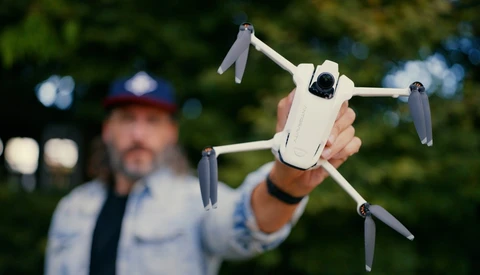
The Funnest Drone to Fly, With One Big Image-Quality Catch
A 360 camera bolted to a 249 g drone changes how you fly, because you stop fighting the camera and the flight path at the same time. That single shift is what makes the Antigravity A1 worth a serious look, and it explains why one creator kept reaching for it long after the video was supposed to be finished.