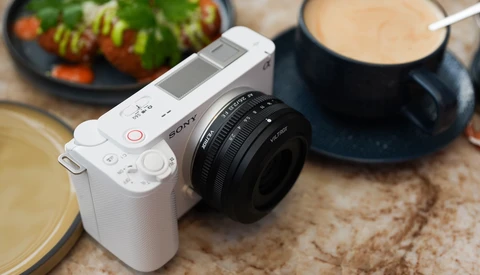
A Good Thing in a Small Package: Viltrox 26mm f/2.8 EVO Review
Everybody loves a good pancake. A pancake lens, that is. Though some pancake lenses sacrifice quality for the sake of size, this new EVO lens begs to differ.
Everybody loves a good pancake. A pancake lens, that is. Though some pancake lenses sacrifice quality for the sake of size, this new EVO lens begs to differ.

A 15-year-old camera with no USB-C charging, no eye sensor, and dated video specs still earns a spot in a working photographer's bag for a trip to the Italian coast. That says something about what actually keeps a camera in rotation years after its spec sheet stops mattering.

Tamron has announced the 12-20mm f/2.8, a fast-aperture ultra-wide angle zoom for Sony E-mount and Nikon Z mount full frame mirrorless cameras. The Sony E-mount version goes on sale July 30 at $1,699, and the Nikon Z mount version follows on August 27 at $1,799.
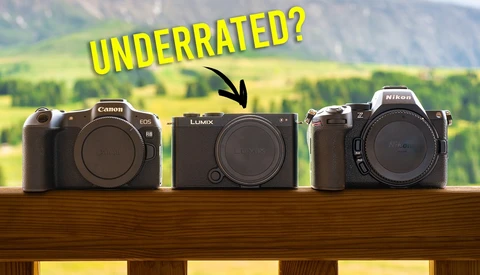
Picking one full frame camera for travel means weighing color, size, stabilization, and price against each other, and the differences rarely show up on a spec sheet. Three cameras in the same price range can feel like completely different tools once you actually carry them through a city all day.
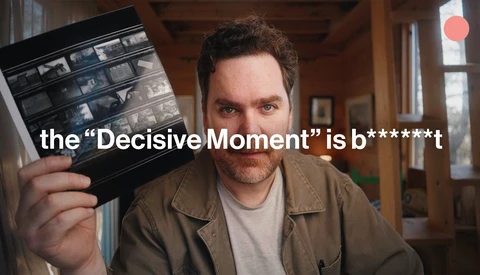
Impostor syndrome hits almost every creative person at some point, and if you shoot photos, you know the feeling: you look at work you admire and wonder why you even bother picking up a camera. Jesse Senko has a surprisingly practical answer to that spiral, and it comes from an unlikely source.
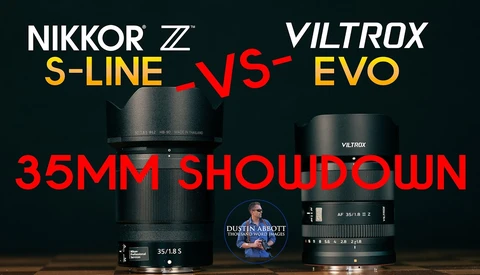
For years, Nikon's f/1.8 S-line lenses stood almost alone: premium optics at a maximum aperture where you rarely find premium anything. That comfortable spot is now under real pressure, and a head-to-head test shows exactly how much.
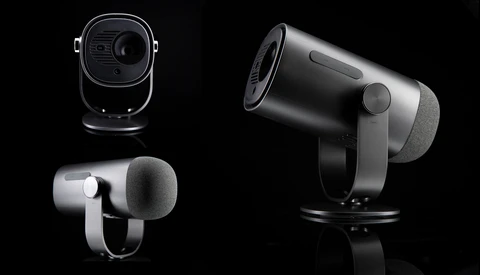
I've been looking for new ways to exhibit my photo and video work, ways that aren't tied to white walls or interior spaces. That search led me toward projectors, and I found one that fits. The appeal of something untethered is obvious in the fact that you can take your work almost anywhere.

In 2010, I made a decision that didn't make much sense on paper. I sold my Nikon gear and bought the first Olympus Pen E-P1.
It was slow. It was imperfect. Autofocus... lol. It didn't impress anyone who cared about specs.
But it changed how I worked in the street.
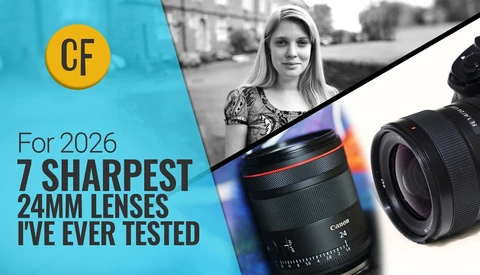
A $200 lens outperforming a Zeiss on corner sharpness is exactly the kind of result that shows how fast optics have moved. The 24mm focal length gives you a wide field of view with just enough drama to hold onto your subject, and paired with a bright aperture, it delivers backgrounds that fall away beautifully.
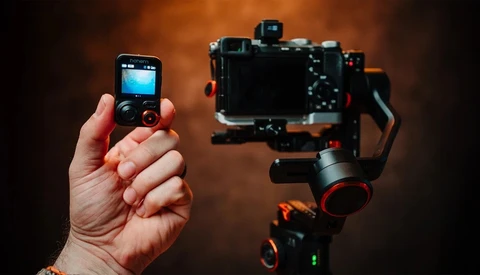
At this point, there are so many brands of gimbals that it can be hard to know which direction to go, especially with heavy-hitting names like DJI at the forefront of most publications and media outlets. But when I saw the MT3 Pro from Hohem, there was a standout feature that made me pause.
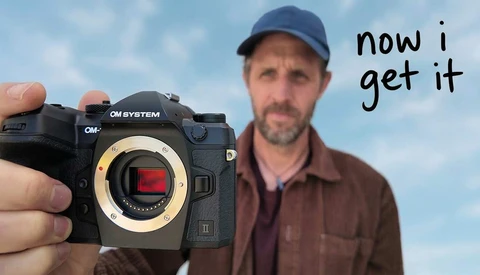
Twenty years behind a camera can lock you into fixed ideas about what gear delivers the results you want. A long-held bias against Micro Four Thirds is exactly what gets challenged here, and the reasons have less to do with specs than with how you actually shoot.
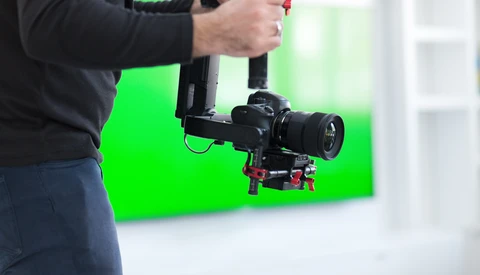
You may have noticed that photography lenses are marked in f-numbers, f/1.4, f/2.8, f/8, while cinema lenses are marked in T-numbers, T1.5, T2.9, and wondered whether they mean the same thing. They are closely related, they sit in the same spots on the aperture ring, and a T-number looks just like an f-number with a different letter in front.
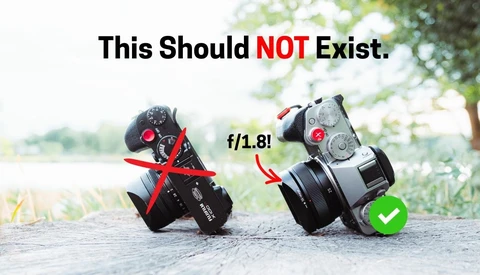
The Fujifilm X100VI has a cult following for good reason: it packs an optical viewfinder, IBIS, a built-in ND filter, and a fast fixed lens into a body small enough to carry anywhere. The catch is the price, and increasingly, the availability.

I had the good fortune of spending some time with Sony's new RX10 V, and I shot the entire range of my life with it. A World Cup match here in Seattle one weekend, then a family outing to the Ballard Locks the next.
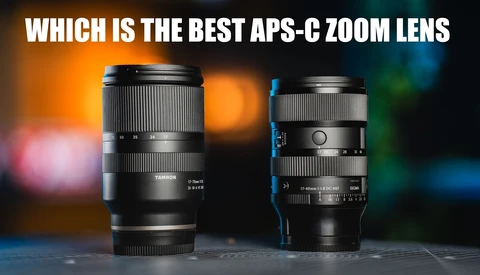
Choosing between a wider aperture and a longer zoom range is one of the most common trade-offs in APS-C lens selection, and few comparisons make that tension as concrete as the Tamron 17-70mm f/2.8 versus the Sigma 17-40mm f/1.8.
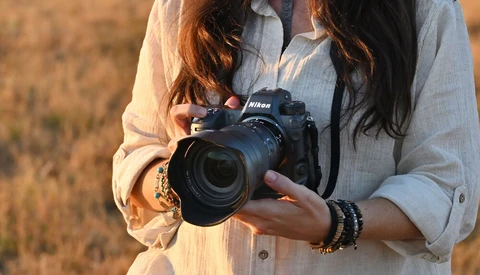
Almost every camera has a shutter, the mechanism that controls how long light hits the sensor, but not all shutters work the same way. Among mechanical shutters, there are two main designs, the leaf shutter and the focal plane shutter, and the difference between them is not trivia.
Red lights blinking on my NAS. Drive failure. Double drive failure. I'm on RAID 6, so the data's still there, but my heart rate has increased. My day is reprioritized — time to work on this.
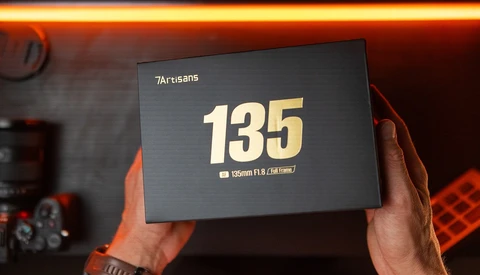
Choosing between the 7Artisans 135mm f/1.8 and the Viltrox 135mm comes down to a real tradeoff: raw optical and autofocus performance versus a lighter, smaller package at a lower price. At $689, the 7Artisans sits well below the Viltrox, and that gap raises a fair question about what you're actually giving up.
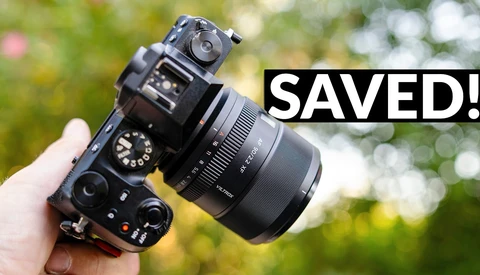
Choosing the right portrait lens for an APS-C system is genuinely hard when the native options are expensive and heavy. The Viltrox 75mm f/1.8 and Viltrox AF 90mm f/2.2 are making a strong case for themselves as lightweight, affordable alternatives for Fujifilm, Sony, and Nikon APS-C shooters.
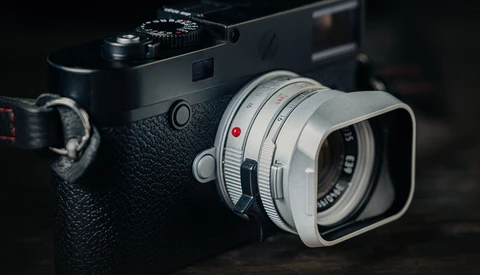
Owing to the growing popularity of Leica cameras in recent years, a bunch of new lens manufacturers have sprung up to provide much cheaper alternatives to Leica lenses. And what's particularly exciting is that, with the aid of modern technology, many rare and desirable Leica lenses from the past can now be reproduced with incredible accuracy.
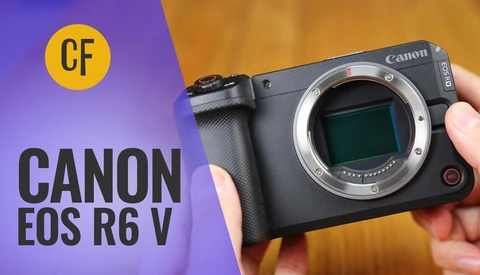
The Canon EOS R6 V is Canon's first full frame V-series hybrid camera, priced at $2,500 body only. It's built for video makers who still need serious stills capability, and at that price, it competes in a range of the market where buyers are making real commitments.
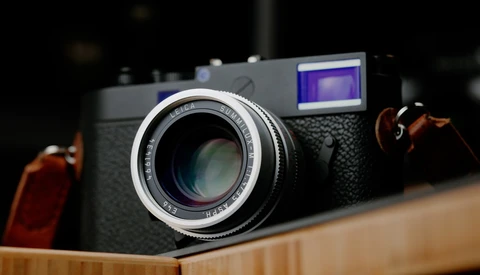
The Leica 35mm Summilux-M f/1.4 ASPH has been around for 16 years, and it was never designed with a 60-megapixel sensor in mind. Whether it holds up on something like the Leica M11 is a real question, and the answer is more nuanced than you might expect.
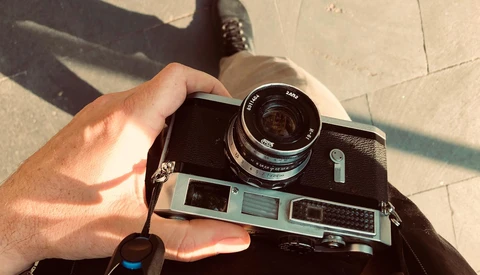
Let's begin with the usual disclaimer:
I am not affiliated with Canon in any way. No sponsorships. No ambassador contract. No free gear raining from heaven. This is simply the perspective of a working photographer who has spent years using multiple systems professionally across documentary, editorial, portrait, and street photography.
And after all that?
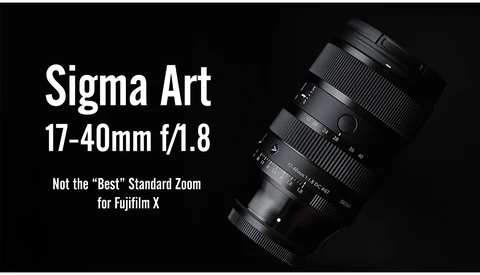
The Sigma 17-40mm f/1.8 for Fujifilm X sits in an interesting spot. It's faster than Fujifilm's own XF 16-55mm f/2.8, covers a narrower zoom range, and costs less, and for event shooters who live in dark rooms, that aperture difference isn't trivial.

Vintage lenses have made a serious comeback, and the question of whether a 50-year-old glass can hold its own on a modern mirrorless body is one worth asking seriously. The Minolta MD 35-70mm costs around $60 used, and if it can genuinely work as a daily walk-around lens, that changes the math on what you actually need to spend on glass.
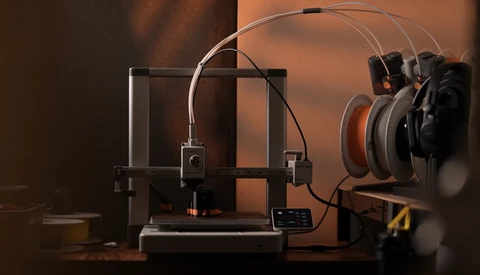
Have you ever wished for a photography accessory or tool and dreamed of making it yourself? If you're the kind of photographer who likes finding neat solutions, 3D printing might be worth checking out.

Most Fujifilm shooters either ignore the Grain Effect entirely or crank it to Strong/Large, decide it looks too noisy, and turn it off again. That pattern makes sense if you've never seen what the setting can actually do when used correctly.
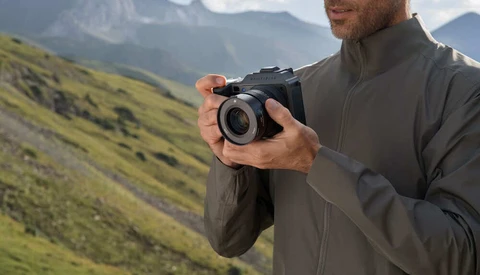
For most of digital photography's history, medium format meant one thing: a five-figure investment, a deliberate studio pace, and a tool reserved for commercial shooters whose clients paid for the absolute ceiling of image quality. The format was the opposite of mainstream by definition. It was the thing you rented for the shoot, not the thing you owned and carried.
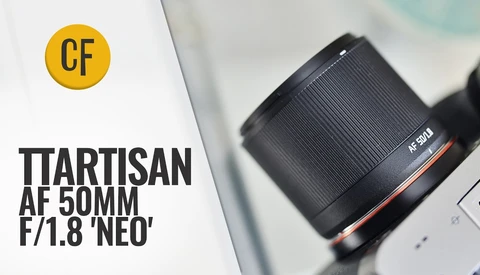
Buying a 50mm lens for under $100 sounds like a deal until you see what you're actually getting. The TTArtisan AF 50mm f/1.8 Neo hits that $89 price point on full frame, and the question isn't whether it's cheap. It's whether cheap is cheap enough to matter.
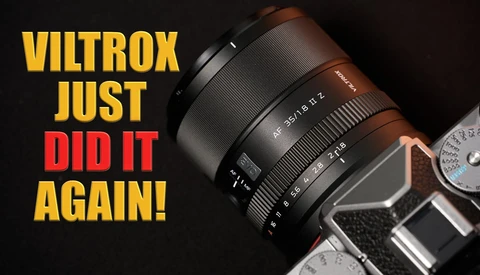
Finding a fast prime with an apochromatic design under $400 is almost unheard of, and that's exactly what the Viltrox 35mm f/1.8 Evo claims to be. Apochromatic lenses correct chromatic aberration by aligning all three color wavelengths to the same focal plane, a feature you typically only find in lenses costing several times more.
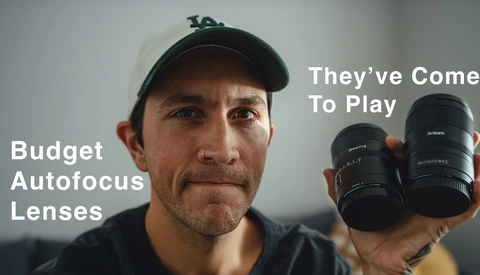
7Artisans has built its reputation on cheap manual focus glass, so releasing autofocus lenses puts the company in direct comparison with brands that have been doing this for years. The bar for autofocus in 2024 is high, and whether a budget brand can clear it is a real question.
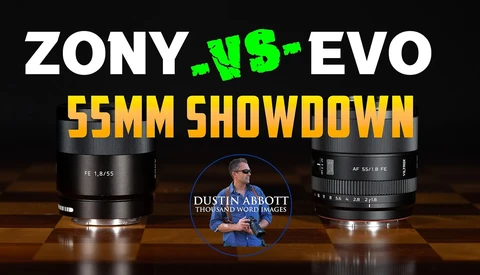
Choosing between a $370 lens and a $1,100 lens is easy when the cheaper one wins on almost every technical measure. The Viltrox AF 55mm f/1.8 Evo is a direct challenge to the Sony Zeiss 55mm f/1.8 ZA, and Dustin Abbott's side-by-side test on the Sony a7R VI makes that case in detail.

Before anything else gets misread, I want to make one thing clear.

Choosing a camera is rarely just about specs. A camera can cost over $6,000, autofocus everything in front of it, shoot at 30 frames per second with pre-capture, and still leave you feeling completely disconnected from your own images.
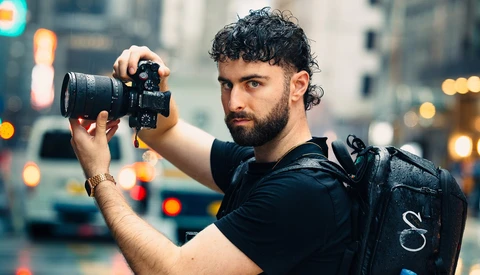
Shooting street photography in the rain sounds miserable until you see what it actually produces. Hong Kong in a full thunderstorm gives you reflections, umbrellas, chaotic traffic, and strangers too focused on staying dry to notice a camera in their face.
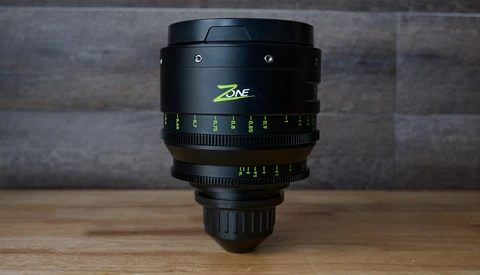
Today I'll have a look at an exciting new lens option for filmmakers, the Zhongyi Zone T1 cinema lens.
The 135mm autofocus lens market has gotten crowded fast, with options from Samyang, Viltrox, and Sigma all competing for your attention on Sony E-mount, Nikon Z-mount, and L-mount. The 7Artisans 135mm f/1.8 enters that field with the lowest MSRP of the group at $689, but price alone isn't enough to stand out when the competition has had years to mature.
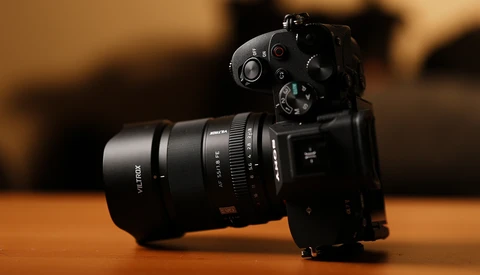
This lens is the perfect example of why one should not judge a lens by its cover. While it may seem like any other budget fast prime, it offers a real, visible difference for your images.
Ultrawide lenses used to cost a fortune. A full frame 14mm f/2.8 from Canon or Nikon ran around $1,500 just over a decade ago, which put serious glass out of reach for a lot of people. Budget manual focus alternatives have changed that equation, and the Brightin Star 14mm f/2.8 is one of the most affordable yet, coming in at around $279.
The Panasonic Lumix GX8 is a Micro 4/3 camera, and that small sensor size gives it one genuinely unusual advantage: you can mount almost any lens ever made on it, from almost any manufacturer, as long as you have the right adapter.

One of the first real decisions a new photographer faces is sensor size, and it arrives wrapped in more anxiety than it deserves. The internet will tell you that full frame is "professional" and APS-C is "entry level," as if the sensor inside the camera decides whether your photos are any good. It does not.
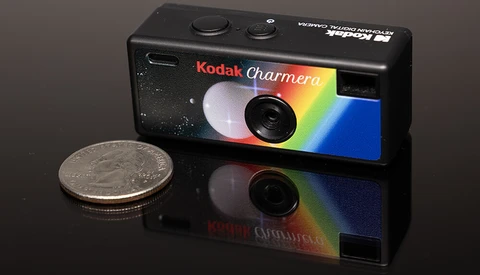
So after hearing about the Viral Cameras of 2026, there was one that stood out from a familiar, but somewhat tarnished, name in the camera business: the Kodak Charmera.
While I've opined in the past about what cameras are good for kids, this might be the one: the Goldilocks camera that's perfect for kids.
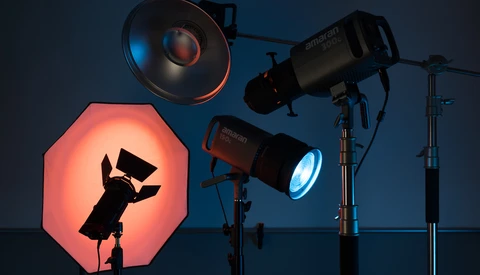
The popular rule of selling unused gear after six months describes one specific kind of author, and photographers who keep specialized equipment connected to their actual practice are not the kind it had in mind.
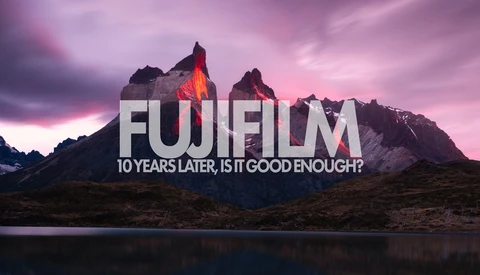
Fujifilm's X system has been a quiet workhorse for serious landscape work for over a decade, and the debate about whether crop sensor cameras can hold their own professionally never really goes away. Andy Mumford's answer, built on 11 years of real-world use across five continents, is worth paying attention to.

If you fly with a camera bag, 2026 is the year the gate finally caught up with you. The bag that "always made it on" for the last five years is now getting weighed, measured, and gate-checked with a consistency that did not exist before. For most travelers this is an annoyance.
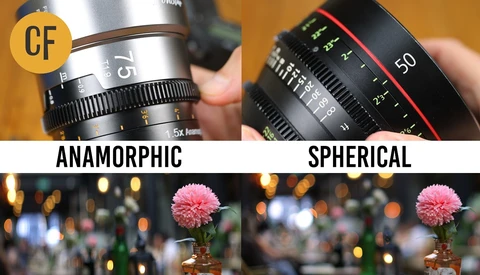
Anamorphic lenses produce a look that's immediately recognizable: stretched bokeh, horizontal lens flares, and a cinematic quality that's defined Hollywood films for decades. The question most people face is whether that distinctive look is worth the tradeoffs compared to a conventional spherical lens.
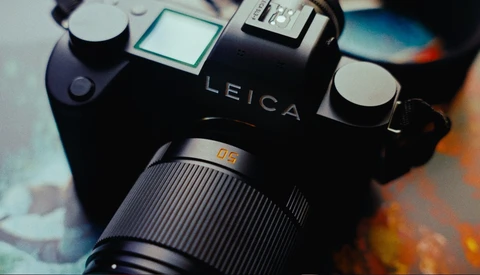
The Leica SL3-P positions itself as Leica's answer to a problem that has frustrated SL system users for a while: you had to choose between the video-focused SL3-S and the resolution-focused SL3, and if you shoot both stills and video seriously, neither option was a clean fit. The SL3-P sits between them, and Leica calls it the best camera they've ever made.
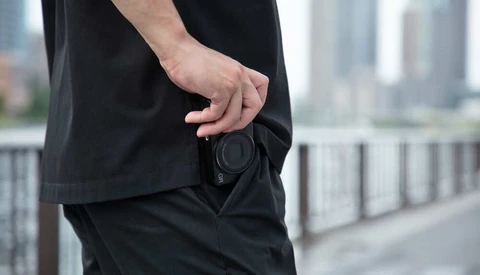
The compact camera is having a genuine revival, and it has caught the industry slightly off guard. Models that sat ignored for years are now selling out, prices are climbing, and manufacturers that abandoned the category are scrambling back into it.

Buying an 85mm lens is one of the most common moves in portrait photography, and it's also one of the most misunderstood. The lens has a reputation for good reason, but the way most people use it wastes most of what makes it worth owning.
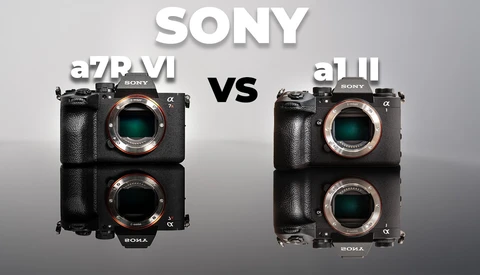
Choosing between the Sony a7R VI and the Sony a1 II is genuinely difficult, and the spec sheets don't make it any easier. On paper, the two cameras overlap so heavily that you could easily talk yourself into either one without ever really knowing if you made the right call.