Fstoppers Originals

Exclusive articles and expert opinions written by Fstoppers’ talented team of creative professionals. Here we cover everything from the latest photographic techniques to advice on running a successful photography business, to first hand accounts of working in the photography industry.

The Lens Upgrade You Think You Need vs. the One You Actually Do

Most photographers approach lens purchases with a familiar mental checklist. They identify a problem, usually something technical, and then shop for a solution. The logic seems airtight: if the images aren't sharp enough, buy a sharper lens. If the background blur isn't creamy enough, buy something with a wider aperture. If the autofocus hunts too often, upgrade to the newest generation with better motors and tracking algorithms. That's wrong.

The Complete Photographer's Guide to Memory Cards: Specs, Speeds, and What Actually Matters

Memory cards are the most overlooked purchase decision in photography. We agonize over camera bodies for months, research lenses obsessively, and then grab whatever SD card is on sale at checkout. This approach works fine until you're shooting a wedding and your buffer locks up during the first dance, or you're recording an interview and the camera stops mid-sentence because your card couldn't keep up.

Sky Replacements Didn’t Ruin Landscape Photography: This Argument Ruined It

Uh oh. A conversation about AI in photography? Let the witch hunt begin. We all know that AI is rapidly becoming a dominant and controversial topic in our industry. I am not here to proclaim one way or another, but simply to open a dialogue between the technical modernization of art and, of course, the purism of the art form.

Choosing The Best Prime Lens: Size Matters

There are so many fabulous prime lenses that have been launched these past 12 months—and continue to be launched—it’s hard to know which direction to go if you’re looking to buy a new one. The choice can be overwhelming and confusing. 

Why Instant Film Is Winning While 35mm Film Is Dying

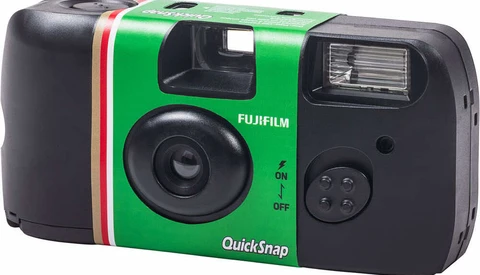
The analog photography revival is real. You can see it at every wedding reception with a disposable camera basket, every college campus where students dangle point-and-shoots from their wrists, every TikTok tutorial on how to load a roll of Kodak Gold. But if you follow the money instead of the aesthetics, you'll find two radically different stories unfolding under the same "film is back" umbrella.

Why Monochrome Became the Ultimate Escape from Responsibility

Black and white photography promises seriousness without risk, coherence without effort, and intention without proof. In an era where color is technically trivial and visually unforgiving, monochrome offers shelter. It removes variables, postpones judgment, and replaces unresolved structure with borrowed authority. It is like dimming the lights in a messy room: the objects do not move, but the problems stop being visible. If an image cannot survive color, was monochrome ever a choice?

5 Used Cameras That Offer Insane Value Right Now

These aren't compromised relics from a forgotten era. They're the same tools that shot magazine covers, documented weddings, and produced professional video content when they retailed for two or three times what they cost today. The sensor inside a five-year-old camera hasn't degraded. The engineering hasn't gotten worse. These cameras have simply depreciated because photographers chase new releases with the enthusiasm of golden retrievers pursuing tennis balls, and that irrational behavior creates opportunity for everyone else.

5 Amazing Cameras You Can Still Buy Brand New for Under $700

The entry-level camera market has withered. Companies that once competed fiercely for first-time buyers have largely abandoned the sub-$1,000 segment, preferring to chase higher margins on enthusiast and professional equipment. But slim pickings isn't zero pickings.

The Most Disruptive Photography Company of 2025 Isn’t Who You Think

Photography in 2025 looks different from what it did even five years ago, and not just because of sensors, codecs, or computational tricks. I think the biggest shift has been economic. For the first time in decades, access to truly capable photographic tools is no longer reserved for people with disposable income or institutional backing.

The Early 2026 L-Mount Alliance Report Card: Seven Years In, Is It Working?

On paper, the L-Mount Alliance has never been healthier. Ten members. Over 120 lenses. More than 20 camera bodies. Sigma shipped nine new lenses and an alien-looking unibody camera in 2025. Panasonic finally buried its autofocus reputation with the Lumix S1R II and Lumix S1 II. Leica celebrated its centennial. Viltrox joined as the tenth member and already delivered its first native L-mount autofocus lens. By the numbers, this is an ecosystem that should be thriving.

5 Legal Battles That Will Shape Photography in 2026

The rules governing who owns a photograph, who can train an AI on it, and where you can fly a drone to capture it are all being rewritten simultaneously. Across courtrooms, five separate legal confrontations are converging on a question that matters to every working photographer: in an age of generative AI and autonomous aircraft, who actually controls the value of an image?

Why You Should Stop at the Locations You Pass Most Often

There is a habit many of us landscape photographers develop without realizing it. We drive past locations we know well, places we have seen dozens of times, and we tell ourselves we will stop another day. The light is not right. The weather is poor. We are on our way somewhere else. Over time, these familiar places become invisible. They are no longer considered options, only background. This is a mistake, and one that limits growth more than most of us care to admit.

5 Things You Can't Control in Photography (And 5 You Can)

Photography is an exercise in managing variables. Some of those variables bend to your will, and some of them laugh at your attempts to impose order. The sooner you learn to tell the difference, the sooner you stop wasting energy on the wrong problems.

Three Tricks to Make More Interesting Photos of Lighthouses

I have a strange obsession with photographing lighthouses. They have a way of making a landscape that much more interesting, and I often find myself taking a road trip just to photograph one. Here are a few tips to help make your photos stand out from the scores of other tourists making the same images. 

5 Things That Matter in Photography (And 5 That Don't)

Photography forums, YouTube comment sections, and gear review threads would have you believe that the path to better images runs through spec sheets and brand allegiances. Spend enough time in these spaces and you might start to think that your sensor size is holding you back, or that real photographers only shoot in manual mode, or that your follower count reflects the quality of your work. None of this is true, but it takes time and experience to see through it.

The Power of Luminar Neo's Newest AI Tools Put to the Test

Every photographer has a collection of images that almost worked. The composition was there, the moment was right, but something about the light fell flat, or the exposure didn't quite capture what your eyes saw in person. We also tend to accumulate old family photographs in shoeboxes and drawers, images yellowed by time and marked by creases from decades of handling. These are the kinds of problems that used to require either significant manual work in Photoshop or simply acceptance that some photos couldn't be saved. Skylum's recent updates to Luminar Neo take direct aim at both challenges, and I've spent the past few weeks putting their newest tools through their paces with my own work.

File Formats Decoded: Raw, DNG, JPEG, TIFF, PNG, HEIF, and When Each Actually Makes Sense

Every photographer makes decisions about file formats constantly, yet most of us operate on habit, hearsay, or whatever our camera defaulted to when we first pulled it out of the box. The problem is that choosing the wrong format at the wrong stage of your workflow can quietly destroy your editing flexibility, balloon your storage needs, break compatibility with clients and labs, or degrade your images in ways you won't notice until it's too late. This guide breaks down what each major format actually does under the hood, what it preserves, what it throws away, and when you should reach for each one across capture, editing, delivery, and long-term archiving.

How Modern Cameras Turn Photographers Into Supervisors

We tend to mistake technological adaptation for professional maturity. As cameras grow more “helpful,” they quietly relocate our attention from seeing to supervision. We stop making decisions and start managing a system.

15 Pancake Lenses That Make Your Camera Pocket-Friendly

There's a particular joy in slinging a mirrorless camera over your shoulder and realizing it barely tugs at the strap. That feeling multiplies when you glance down and see the lens sitting almost flush with the body, transforming what should be a serious photographic tool into something that looks more like an oversized point-and-shoot. Welcome to the world of pancake lenses, where compactness isn't a compromise but a deliberate design philosophy.

10 Photography Laws That Sound Made Up (But Are Very Real)

From copyrighted light bulbs to illegal selfies, here are the strangest regulations governing your shutter button. Most photographers operate under a simple assumption: if your eyes can see it, your camera can capture it. Point, shoot, done. Nobody can tell you otherwise. Except they absolutely can.

5 Used Camera 'Flops' That Are Now Incredible Bargains in 2026

The internet has a long memory, and nowhere is that more apparent than in the used camera market. Cameras that launched to scathing reviews, forum outrage, and YouTube takedowns carry that baggage for years, even when the original criticisms have become largely irrelevant. The result is a fascinating opportunity for photographers who can separate genuine limitations from outdated grievances: cameras with professional image quality selling for a fraction of their original price because the collective hive mind decided they were failures half a decade ago.

Lens Specs Decoded: What MTF Charts, Element Counts, and Aperture Ratings Actually Mean for Your Photography

Camera specifications have become reasonably standardized over the years, but lens specifications are a different animal entirely. Optical performance resists easy quantification, and manufacturers have learned to fill that void with impressive-sounding terminology that obscures more than it reveals. This guide cuts through the jargon to explain what each specification actually measures, when it genuinely affects image quality, and how to read between the lines when comparing options.