
Profile picture for Alex Coghe

Alex Coghe

Mexico City, MX
alex street
1 Top Contributor badge

Articles from Alex Coghe

Exoticism and Colonialism in Photography: A Critical Look at 'Photographing the Other'

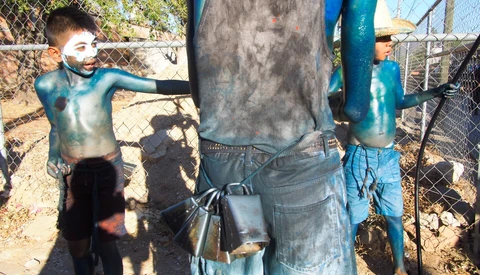
I've studied the exotic and colonialist gaze in photography extensively. I began to develop an interest in it through some texts I read in the Mexican magazine Cuartoscuro, and then I delved deeper into it through a book a friend gave me. Other readings helped me develop an even more complete understanding, such as the National Geographic book on portraits, in which the agency itself acknowledged the colonialist gaze and the exploitation of the "naked bodies of African tribal women" to sell more copies of its magazine.

Efrem Raimondi Taught Me That a Portrait Is Never About the Person In Front of the Camera

A few years ago, I got a friend request I didn't expect. It came from Efrem Raimondi. If you're not familiar with the name, you've almost certainly seen his work without knowing it. Raimondi was one of Italy's most respected portrait photographers, the man behind decades of images of Vasco Rossi, Italy's biggest rock star, as well as portraits of Monica Bellucci, Joe Strummer, Formula 1 driver-turned-handcyclist Alex Zanardi, Riccardo Muti, footballer Zlatan Ibrahimović, and even seven-time Prime Minister Giulio Andreotti. He shot for GQ, Vanity Fair, and Rolling Stone and worked with brands like Prada and Trussardi. He sat on the Hasselblad Master Jury. He was, by any measure, a master. So when Efrem Raimondi reached out to me, it stopped me in my tracks.

About Stupid Attacks and Street Photography

A comment on an old post accused me of photographing only women, and rather than let it sit, I want to take it apart, because the accusation says far more about how people look at images than about how I make them. What follows is less a defense than an explanation of what I am actually doing when I raise the camera, and why the subject is rarely the point.

Films Every Photographer Should See

The visual is cultivated through visions. It may seem like an oxymoron, but we often tend to overlook the importance of nurturing our ability to see. The perception of experience also stems from our cultural background. And if it's missing, we often fail to understand how to photograph.

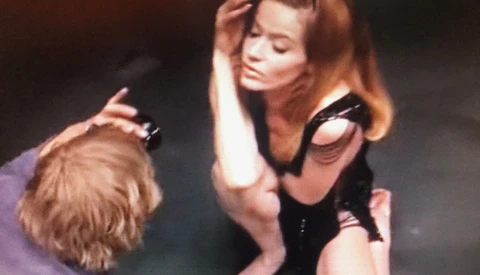
Blow-Up: The Most Important Film Every Photographer Should Watch

One of the greatest surprises photography has given me has almost never arrived while I was out walking with a camera. It has arrived afterward, sometimes the same evening, sometimes months later, when I have found myself looking at a photograph I believed I already understood and suddenly noticed something that had escaped me completely while I was making it.

About Image and Visual Literacy

First there was the word, from a creative point of view, but in terms of reasoning, first there was light. Image and content travel within it. If light travels faster than sound, its content is also received much earlier. If, before speaking, we communicate through sight, we must restructure the way we learn.

Yashica Taught Me to See. Now It's Selling Me Garbage.

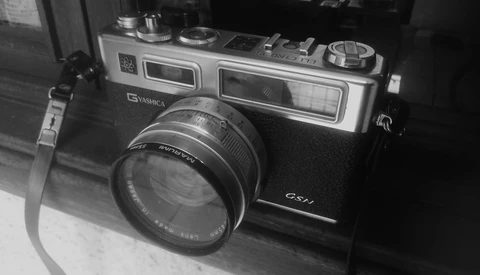
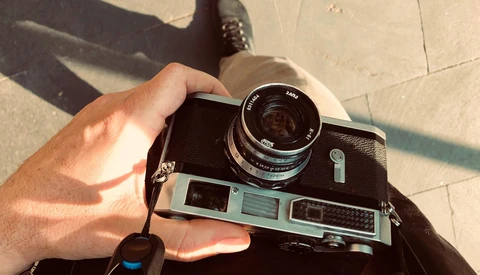
There's a camera on my shelf that changed how I look at the world: a Yashica Electro 35 GSN. Heavy. Honest. A rangefinder that asked nothing of me except to slow down and pay attention. The 45mm lens acts as a "normal" or standard field of view on the camera's 35mm full frame format, allowing you to make everything from street photography to portraits. That camera is part of why I photograph the way I do today. The company that made it doesn't exist anymore.

The Discipline of Getting Lost

There is a certain kind of photography that does not begin with a plan, a map, or even a clear idea of what you are looking for. It begins the moment you realize you are already lost and you decide, consciously or not, to keep going anyway.

Keep Calling the 50mm Boring. I’m Fine With That.

There is a peculiar type of confidence that thrives in photography today, and it usually arrives wearing the expression of a man who has just discovered absolute truth through a combination of autofocus charts, affiliate links, and an aggressively edited YouTube thumbnail. He speaks with conviction about lenses as if discussing racehorses or religious doctrine. One focal length is cinematic. Another is immersive. One possesses "magic." Another is dead on arrival. And somewhere in this increasingly theatrical courtroom of photographic opinion sits the 50mm, quietly accused of the gravest crime modern photography can imagine: being boring.

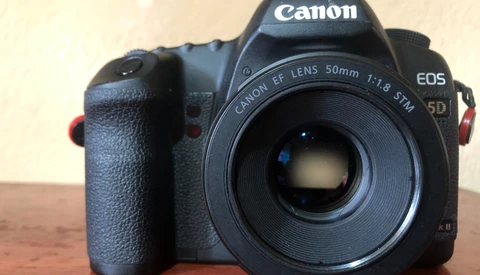
The Canon 5D Myth: Why This Camera Refuses to Die

There are cameras people buy because they are new, and cameras people keep because they matter.

I think the Canon 5D belongs to the second category. Long after mirrorless systems took over conversations, long after spec sheets became the dominant language of photography, the 5D series continues to occupy a strangely untouchable space. Not merely respected. Not simply remembered. Mythologized. And perhaps that is the real story, because the Canon 5D was never just a camera. It was a permission slip.

What Photography Asks of You

I've never been able to decide whether writing is more demanding than photography or the other way around. Every few years I convince myself I have the answer, and then something happens that proves me wrong.

Dear Anonymous Critic, May I See Your Work?

There is a particular kind of confidence that only exists on the internet. You have probably encountered it if you've ever published a photograph, written an article, uploaded a YouTube video or, for that matter, dared to have an opinion in public. It belongs to the person who has never shown you a single piece of their own work, yet has absolutely no hesitation in explaining why yours falls short.

The Quiet Friendship Between Two Photographers Who Never Needed to Meet in Public

There's a fairly common way to begin a piece about two photographers: describing when they met. This isn't that kind of story. Between Luigi Ghirri and Claude Nori, there's no iconic image shared together, no textbook foundational episode, not even the certainty that they ever needed to truly define their relationship.

Why I Put a Stealth Lens on the Loudest Camera I Own

Most likely, this won't matter to many people, but I'm writing it and proposing it anyway, also because I'm convinced that there's only one person who will be interested in this piece about an antiquated setup that, in my opinion, still works great today. At least it works for me.

The FIFA 2026 World Cup Is Somewhere Else

There is a particular kind of expectation that follows you when you say you are in a country hosting a World Cup. It is not always spoken out loud, but it sits there in the background of conversations, in messages, in assumptions that come almost automatically, as if geography alone were enough to place you inside the flow of the event.

Haters Never Show Their Faces and Photographic Work

I've always wondered what goes through someone's mind when they decide to become a hater. Being a hater is a kind of job: you have to create fake accounts, which guarantee anonymity, and then, from those accounts, launch attacks against the object of your hatred.

10 Reasons I Chose Canon: Even When the Internet Thinks It’s “Not Cool” Anymore

Let's begin with the usual disclaimer:

I am not affiliated with Canon in any way. No sponsorships. No ambassador contract. No free gear raining from heaven. This is simply the perspective of a working photographer who has spent years using multiple systems professionally across documentary, editorial, portrait, and street photography.

Leica Was Never Really About Cameras

Before anything else gets misread, I want to make one thing clear.

Years ago, Leica Camera AG hired me for an assignment worth roughly $10,000: the photos in this article are from that assignment that made the Leica X catalog in 2013. Today I have no working relationship with them, and I don't own any Leica cameras. I currently shoot Canon. I mention this only because Leica discussions tend to turn strangely ideological online, as if any nuance automatically comes from sponsorship or resentment. It doesn't. Sometimes it just comes from having been close enough to see how the myth behaves from the inside.

When the Street Becomes Too Open

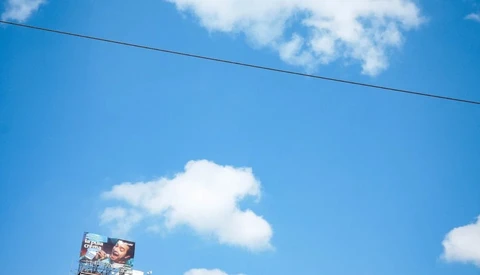
There are moments when the street offers nothing back. No gesture, no alignment, no interruption — just space, air, a sky that refuses to hold anything except itself, a line cutting across almost by accident, a billboard drifting at the edge already dissolving into irrelevance. 

Dogma 11 in Photography: A Set of Rules or a Necessary Constraint?

In photography, there's always a tension between control and immediacy. On one side, you have post-production, refinement, and the ability to shape an image long after it's been captured. On the other, there's the raw act of photographing in real time, where decisions are irreversible.

"Dogma 11" sits firmly in the second camp.

Who Are the Unique Voices in Street Photography Today?

Street photography has become so codified that much of it now looks like photographers photographing other photographs. That sentence might sound unfair, perhaps even provocative. After all, we are living through a golden age of technical accessibility. Cameras have never been better, books are everywhere, and great work from every continent is just a swipe away. Knowledge that once took decades to acquire is now available in a 20-minute YouTube video. In the first years of the 2000s, we did not have anywhere near the access to information that we have today.

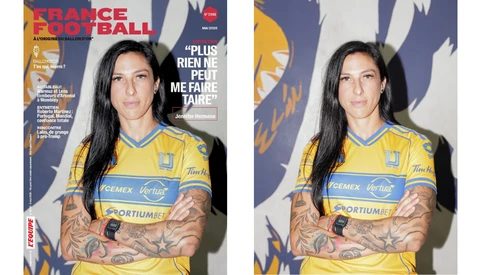
How I Photographed a France Football Cover in Mexico

What photographing Jennifer Hermoso taught me about editorial photography, trust, and why magazine covers still matter.

Magazine covers still matter.

That may sound almost old-fashioned in a time dominated by feeds, algorithms, and endlessly scrolling images that disappear seconds after being seen. Yet the magazine cover remains a strange exception. It still carries weight, it still feels curated rather than accidental, and perhaps most importantly, it still says something about the image selected to represent an entire story.

The Camera Market Is Shrinking. But That’s Not the Story.

Every few months the same narrative comes back: "The camera industry is dying." It sounds clean, dramatic, and easy to share. But the camera industry isn't really dying. It already lost 90% of its market and learned how to call it "stability." 

Photography Is Not About Photography

Photography, despite what the internet has spent the last fifteen years trying to convince you, is not about photography. It is about life. Photography is simply what happens when life collides with awareness. The camera is not the source. It is the witness.

The Problem With Paradise

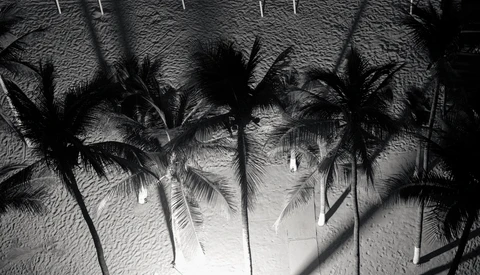
Acapulco at night feels less like a city and more like a stage set designed by a casino architect having a mild nervous breakdown. Palm trees multiply in every direction. Floodlights blast the sand with the subtlety of a prison yard. Massive hotels rise from the coastline pretending time still moves the way it did decades ago, as if glamour could survive indefinitely through architecture and denial alone.