Historical Photography

Photography has a rich and complicated history — full of iconic images, pioneering figures, forgotten archives, and equipment that shaped how we see the world. This section digs into that history, from the earliest daguerreotypes to the defining photojournalism of the 20th century, exploring how the medium evolved and what we can still learn from it today.

The Story of One of the Most Famous Photos Ever

In January 1996, Charles O'Rear pulled onto the shoulder of California State Route 121 in southern Sonoma County, pushed a Mamiya RZ67 through a wire fence, and made a few exposures of a bare green hill. The film in the back was Fujichrome Velvia, an ISO 50 transparency stock.

Seven Cameras Famous Photographers Actually Used for Their Most Iconic Work

One of the most recognized photographs in the history of National Geographic was made on a camera you can still buy used for a few hundred dollars. Steve McCurry pointed a Nikon FM2 with a 105mm lens at a girl of about 12 in a Pakistani refugee camp in 1984, loaded Kodachrome 64, and came away with "Afghan Girl." No autofocus, no built-in motor drive, no computer in the box.

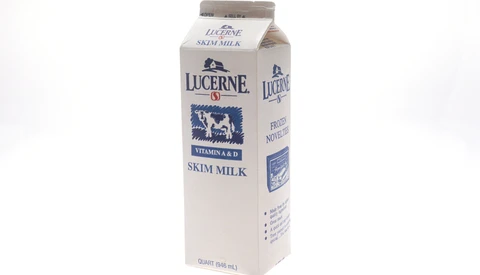
Why Kodak Film Sensitivity Depended on Cows and Mustard

The working dose Samuel Sheppard wrote into his patent was 2 to 3 grains of thiosinamine per 100 pounds of dry gelatin, which works out to roughly three or four parts per million. Added to a gelatin stripped of its natural sensitizer, that trace could raise the emulsion's sensitivity by a factor of ten or twenty. Nudge it upward and the film fogged.


Kodachrome Ended in Parsons, Kansas: Dwayne's Photo Ran the Last Roll on January 18, 2011

In the last week of December 2010, a railroad worker named Jim DeNike drove from Arkansas to Parsons, Kansas, and loaded a dozen boxes holding nearly 50,000 slides into an old maroon Pontiac. He had sent Dwayne's Photo 1,580 rolls of Kodachrome and paid $15,798 to have them developed, borrowing against his father's retirement account to cover it.

The Fake Photo That Helped Sink a U.S. Senator

In the last stretch of the 1950 Maryland Senate race, roughly 300,000 copies of a four-page tabloid called From the Record went out across the state, and inside was a picture of Senator Millard Tydings standing close beside Earl Browder, the former head of the American Communist Party. The two men had never posed together, and the caption underneath called the picture a composite.
How the 'Blue Marble' Became One of the Most Reproduced Photographs in History

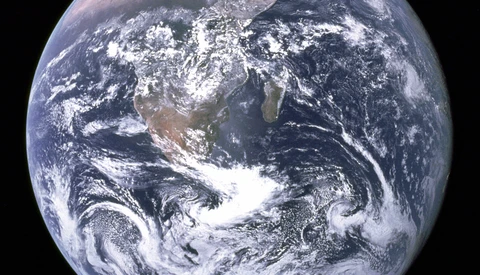
One of the most reproduced photographs of Earth ever made was shot upside down. When an Apollo 17 astronaut framed the fully lit planet through a Hasselblad on December 7, 1972, the South Pole sat at the top and Africa ran sideways, exactly as the crew saw it on the way to the Moon. The version fixed in your memory has been turned a half circle from the original frame.
 

Six-Tenths of a Second Separated Two Dallas Photographers in 1963, and Only One Won the Pulitzer

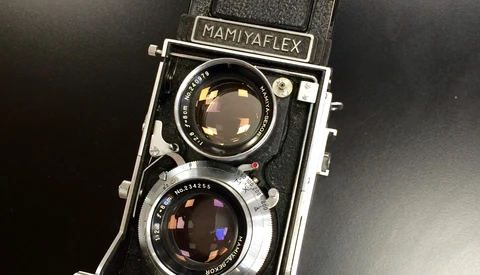
At 11:21 on the morning of November 24, 1963, Jack Beers was standing on a railing in the basement of Dallas police headquarters with a Mamiyaflex twin-lens reflex, and he tripped his shutter as Jack Ruby stepped into the open. Several feet lower and to his left, Bob Jackson released the shutter on a Nikon S3 six-tenths of a second later. Beers got Ruby walking; Jackson got the bullet.

This Famous Ether Daguerreotype Shows the Wrong Patient

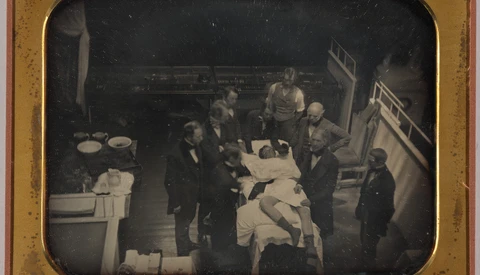
In the whole plate daguerreotype the Getty Museum catalogs as "Early Operation Using Ether for Anesthesia," a young man lies on a table in a Boston amphitheater with both legs bare below the knee and his socks still on. Nine men crowd around him, and several of their faces are smeared by the length of the exposure.

The First American Wanted Poster With Photographs Went Out in 1865, and One of the Three Faces May Be the Wrong Brother

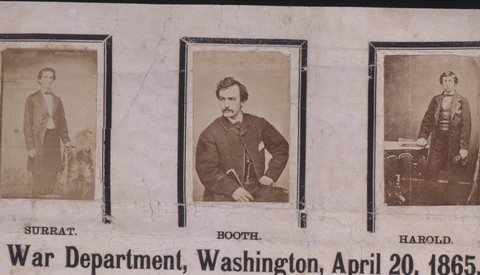
The War Department's April 20, 1865 reward broadside carries three photographs a little over three inches tall, pasted by hand into printed frames at the top of a sheet nearly two feet long. Somebody sat with a pot of paste and a stack of prints and mounted them one sheet at a time. No two copies of the most famous wanted poster in American history are quite the same object.


Why Fujifilm Survived the Digital Apocalypse That Killed Kodak

Walk into a department store in Tokyo and you can buy an anti-aging skin cream made by a camera company. It is called Astalift, and the collagen and antioxidant science inside the bottle came straight out of the labs that once kept your photographic prints from yellowing.

The Strange Story of the Kodak Disc, the Worst Camera Kodak Ever Shipped

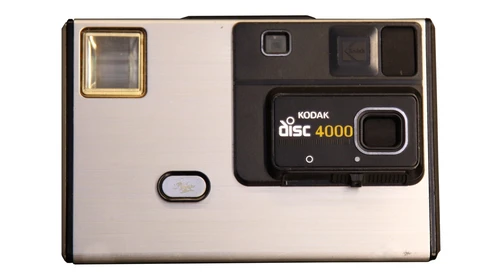
In 1982, Kodak sold roughly 8 million disc cameras in a single year, and its president told shareholders the disc system would be "the new engine that will drive this industry forward." Inside those flat little bodies sat a genuine engineering triumph, including the first mass-produced molded glass aspheric lens element the camera industry had ever seen.

Five Legendary Lost Photography Archives, and What Became of Each One

Some of the most important photographic archives ever assembled are gone, and a small number of historians have spent their careers trying to get them back. One of those hunts had a storybook ending. In December 2007, three weathered cardboard boxes reached New York's International Center of Photography, carrying roughly 4,500 Spanish Civil War negatives that had been missing since 1939.

Why Every Culture Poses Differently: A World Tour of Photographic Body Language

Hand a phone to a group of teenagers in Osaka and start counting. You will rarely reach three before the first two fingers go up beside a chin, while the same camera pointed at strangers in Moscow gets a level, unsmiling gaze that an American would read as hostility and a Russian would read as basic composure.

The Rise and Fall of the Mall Portrait Studio

On April 3, 2013, one company turned off the lights in more than 2,000 portrait studios in a single day. CPI Corp. ran the Sears Portrait Studios and the PictureMe studios tucked inside Walmart, and when it collapsed it took the mottled blue backdrop, the laser-beam background, and the sheet of wallet-size prints down with it.

Kodak Detected the First Atomic Bomb Test Because Its Film Kept Fogging

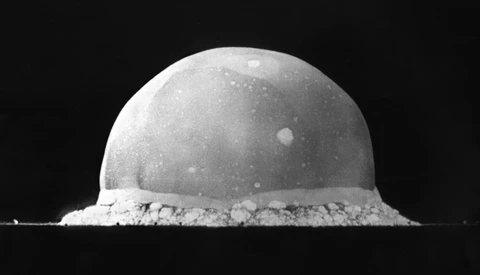
A batch of packaging board made at a mill on the Wabash River on August 6, 1945 came out radioactive, and the X-ray film stacked against it fogged after roughly two weeks in the box. A physicist at Eastman Kodak worked backward from those spots to a bomb test about 1,000 miles away in the New Mexico desert. He then sat on the finding for four years before publishing it.


Are These Never-Before-Seen Photos of Bonnie and Clyde?

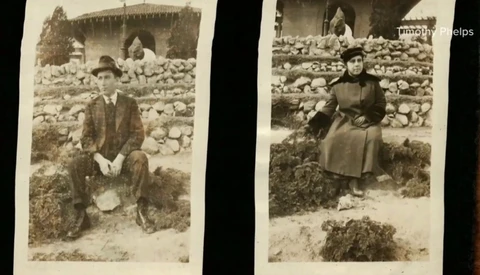
An old photo album pulled from a garage contains a snapshot with Clyde Barrow's and Bonnie Parker's names handwritten on it, and the man who found it believes several of its pictures show the outlaw couple in scenes that have never been published. 


The Full Story of 'Migrant Mother' and the Woman Who Hated It

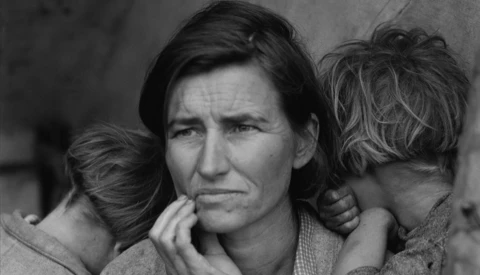
The most famous face of the Great Depression belonged to a woman who wished the picture had never been taken. Florence Owens Thompson sat for Dorothea Lange for about ten minutes in a California pea field in March 1936, said almost nothing, and never earned a cent from the portrait that turned her into a national symbol. For most of the next 47 years, she resented it.


Full Frame Is 24x36mm Because a Leitz Engineer Doubled a Movie Frame in 1913

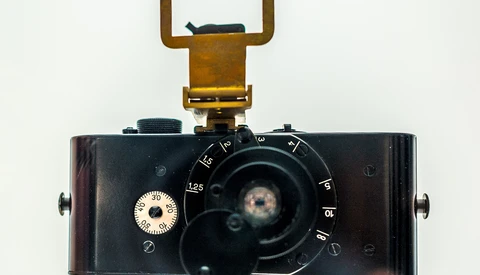
The short side of a full frame sensor is a silent-movie measurement. Cinema's full aperture ran about 24.89mm across the strip, from one row of perforations to the other, and when Oskar Barnack turned that film on its side in a workshop at Ernst Leitz in Wetzlar, that number became the height of a still photograph.

How the First Photograph of a Snowflake Took a Vermont Farmer 46 Years

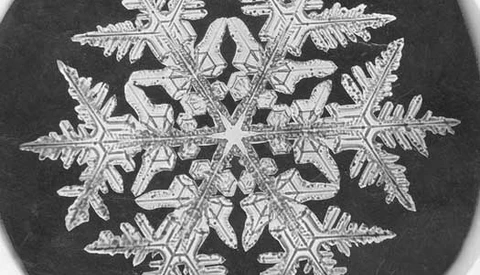
Wilson Alwyn Bentley made the first photograph of a single snow crystal on January 15, 1885, in an unheated shed behind his family's farmhouse in Jericho, Vermont. He was nineteen, a few weeks short of his twentieth birthday, working a bellows camera bolted to a microscope on a frame he had built himself.

Eight Legendary Darkroom Tools Most Photographers Under 40 Have Never Seen

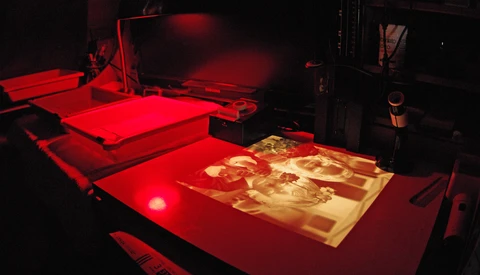
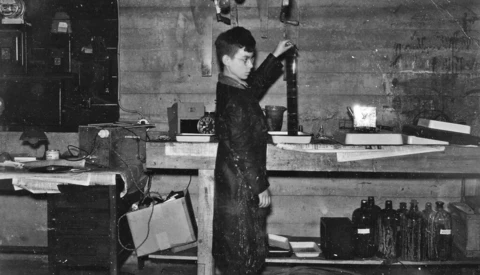
Making a single black-and-white print used to take a locked room, a red bulb, and roughly eight specialized tools that have almost no equivalent on a modern desk. If you started shooting after the smartphone, there is a good chance you have never touched any of them, or seen them work.

The Famous World War I Armistice Recording Is Actually a Photograph Made on 35mm Stock

At 11 a.m. on November 11, 1918, an American crew near the Moselle River was pulling a strip of light-sensitive material past a beam of light while a tuning fork laid a hundred timing marks a second along its edge. What came off that machine is a photograph of a front going quiet, and the birdsong you hear over it on social media could never have reached it.


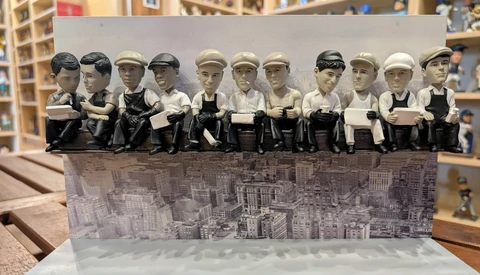
This Incredible 'Lunch Atop a Skyscraper' Bobblehead Puts All 11 Ironworkers on a Beam, Limited to 1,932 Pieces

The National Bobblehead Hall of Fame and Museum has unveiled the first bobblehead version of "Lunch atop a Skyscraper," the 1932 photograph of 11 ironworkers eating lunch on a girder 850 feet over Manhattan, in the week of the picture's 94th anniversary. All 11 men have bobbing heads, the scene is 13 inches long, and the run is limited to 1,932 numbered pieces at $100 each.


Seven Controls on Your Mirrorless Camera Still Shaped by Cameras That Loaded Film

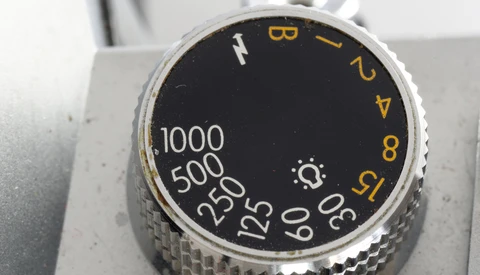
The 1/125 on your shutter dial is a rounding error that stuck. The scale it sits on halves at every step, which puts that rung at 1/128, and 1/128 is an ugly number to stamp into metal. Your camera is full of settings like that: numbers and buttons whose shape was fixed by brass, gears, and gelatin, and that crossed into digital without anyone stopping to re-derive them.


The Undeveloped Film Market: The People Who Buy Strangers' Mystery Rolls at Estate Sales

In late 2014, a lot of 31 undeveloped film rolls that had turned up at an auction in Ohio made its way to a photographer in Boise, Idaho named Levi Bettwieser, who started processing them one at a time. What rose up in the developer was a young American soldier's private record of World War II, shot on rolls that had sat exposed but unprocessed for roughly 70 years.

The First Full Frame DSLR Was a $7,000 Flop Almost Nobody Owns

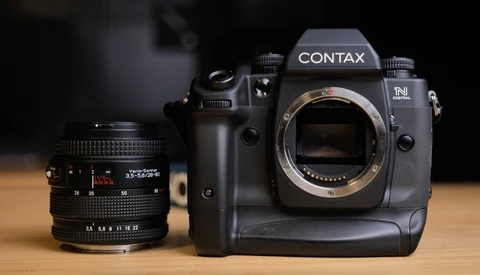
The first full frame DSLR ever made didn't come from Canon, Nikon, or Sony. It came from Contax, a nearly century-old brand tied to Zeiss glass, and the camera that earned that title may also be the one that ended the company for good.


Why We Smile in Photos: The Surprisingly Recent History of Saying 'Cheese'

By the early 1840s, a daguerreotype portrait no longer took a quarter of an hour. Faster plates and brighter lenses had cut a studio sitting to under a minute, short enough to hold a pleasant face without much strain. Yet for the next 60 years, almost nobody in front of a camera smiled.


How Photographs Helped Create Yellowstone, the World's First National Park

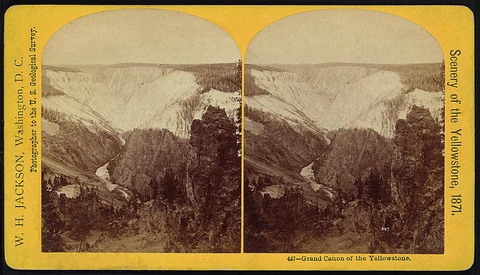
The 1872 law that created Yellowstone runs only a few hundred words and never mentions a photograph. By the time President Ulysses S. Grant signed it on March 1, prints of the region and a painter's field watercolors had reached Washington and were being used to sell the idea. The pictures entered the campaign before the vote, then left almost no trace in the formal legislative record.

Autofocus Turns 50 in 2027, and the Camera That Started It Was a Konica

Japan observes a Camera Day on November 30, and the date comes from 1977, when Konishiroku Photo Industry put the Konica C35 AF on sale. It was the first mass-produced camera that focused itself, and the part doing the focusing was built by a Minneapolis company whose main businesses were thermostats, industrial controls, and defense electronics.

Joseph Petzval Calculated the First Fast Portrait Lens in 1840 and Watched Someone Else Get Rich

By May 1840, a mathematics professor in Vienna had finished a lens before a single piece of glass had been ground for it. Petzval worked the design out on paper, with a squad of army computers grinding through the arithmetic under his direction, and the result gathered roughly 20 times more light than the lens sitting on the front of a typical daguerreotype camera.

10 Technologies Photographers Inherited From the Military

The zoom ring on a modern 70-200mm traces back to a viewfinder accessory the US Army Signal Corps clipped onto its 35mm combat movie cameras. Frank Back, the Austrian-born engineer who designed it, spent the war improving cameras and lenses for the Signal Corps and then turned the same optical trick into the first zoom lens that caught on.

The First Photo Ever Transmitted by Wire, and the Machine That Sent It

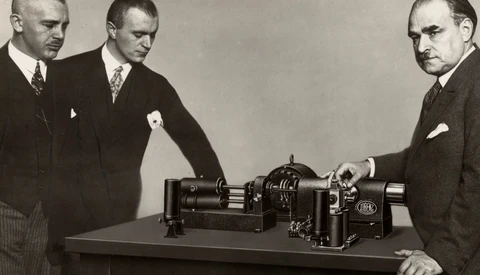
In October 1906, a portrait of the German Crown Prince left Munich as nothing more than a flickering electric current, fought through roughly 1,800 kilometers' worth of telegraph line, and emerged at the far end as a photograph you could actually recognize. No train carried it. No courier, no envelope, no darkroom on the far end printing from a shipped negative.

We Examined 90 Years of Camera Ads. High-End Gear Was Never Cheap.

Photographers have a myth, and like most good myths it gets told with real feeling, usually in a comment section, usually in all caps somewhere near the end. Cameras used to be affordable. Real cameras, made by people who cared, sold at honest prices to working photographers who did not have to remortgage anything.

The Story of The Earliest Known Surviving Photo of a Person

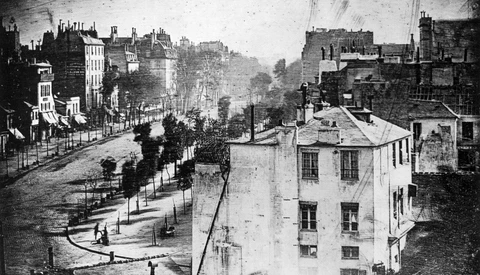
Look at the picture and you see an empty Paris street. Wide sidewalks, a row of trees, tall buildings, and almost no sign of life on what should have been a busy morning. Then your eye catches it: down in the lower left corner, one small figure stands with a foot up on a shoeshine box, and a second figure crouches at his feet.