





Profile picture for Alex Cooke
Editor-in-Chief

Alex Cooke

Cleveland, OH
18 3 Star badge
1 10+ Portfolio Images badge
1 Editor's Pick badge
1 Top Contributor badge

Original Articles from Alex Cooke

10 Tips for Tack-Sharp Handheld Photos in Low Light

Every photographer has been there. You're at a dimly lit wedding reception, a moody concert venue, or walking the streets at night, and your camera is begging for a tripod. But tripods aren't always practical, welcome, or even permitted in these environments. The good news is that you don't need one.

5 Weather Conditions Pros Hunt For (And How to Use Them)

Ask a non-photographer about their ideal shooting conditions, and they'll probably describe a clear, sunny day with blue skies. Ask a professional, and you'll get a very different answer. The photographers whose work stops you mid-scroll on Instagram aren't waiting for perfect weather. They're actively hunting for the atmospheric conditions that most people hide from.  

5 Legendary Lenses That Desperately Need a Modern Remake

In the relentless march toward clinical sharpness and autofocus perfection, camera manufacturers have left behind some truly special lenses. These weren't always the sharpest or the fastest focusing optics ever made, but they possessed something increasingly rare in modern lens design: character.

5 Point-and-Shoot Cameras That Are Just Plain Fun to Shoot

Photography shouldn't feel like work. Somewhere between megapixel counts and autofocus point comparisons, we've forgotten that cameras can simply be enjoyable to use. These five cameras, from vintage film classics to quirky modern experiments, prove that the best gear isn't always the most capable or the most expensive.

5 Cameras Every Photographer Should Try at Least Once

Forget megapixels and AF points. This is a list of cameras that deserve your attention not because they'll make you a better photographer, though they might, but because they represent something pure about the act of making images. They are defined by their unique constraints and the deliberate, often joyful experience they offer.

How Sony Ate Canon and Nikon's Lunch: The Five-Year Head Start That Changed Photography Forever

In the autumn of 2013, if you walked into any professional photography studio, sporting event, or wedding venue, you'd see a sea of black cameras with red rings and gold badges. Canon's 5D Mark III and Nikon's D800 weren't just cameras, they were symbols of serious photography. Their size, their weight, their distinctive mirror slap, these were the sounds and feels of professional work.

The Rise and Fall of the Point-and-Shoot Camera

There's a 10-year-old Canon PowerShot in your parents' junk drawer. It was once a $300 piece of high technology, a marvel of miniaturized optics and digital sensors that could fit in a shirt pocket. Today, the phone in your hand takes better photos in worse lighting without you thinking about it. This is the story of how the smartphone killed the most popular camera on Earth. 

5 Legendary Lenses That Changed Photography Forever

Photography has been revolutionized not just by cameras, but by the glass in front of them. While cameras capture the image, it's the lens that creates it: shaping light, defining character, and determining what's even possible to photograph.

10 Amazingly Affordable Sony-Compatible Lenses Worth Buying

Sony's G Master lenses are spectacular, but they'll empty your wallet quickly. Many G Master lenses cost $2,000 or more, with flagship zooms pushing $3,000 or beyond. The good news? Third party manufacturers and Sony's own value-focused designs have created professional grade optics at prices that seemed impossible just years ago. 

Why Your First Lens Matters More Than Your First Camera

Walk into any camera store with $1,500 to spend, and you'll likely walk out with a $1,200 camera body and a $200 kit lens. It's the default package that manufacturers bundle together, and it seems logical enough. After all, the camera is the brain of the operation, right? The body has all those megapixels, the fancy autofocus system, the brand name emblazoned on the front.

Pentax Bet Everything on Photographers Coming Back to DSLRs. Now What?

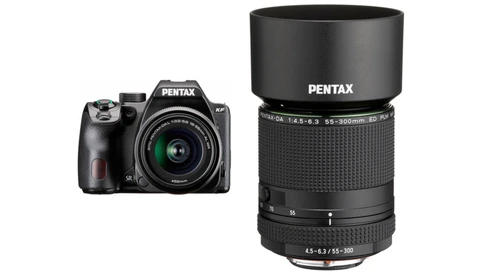
In 2019, while every other camera manufacturer was embroiled in the race to develop mirrorless systems, a Ricoh executive said something truly remarkable: "After one or two years, some users who changed their system from DSLR to mirrorless come back to the DSLR again." He went further, predicting that "the DSLR market is currently decreasing a little bit, but one year or two years or three year

The Patent War That Changed Photography Forever

In 1976, Kodak made what seemed like a smart business decision. Polaroid had dominated instant photography for decades, and consumers clearly wanted the technology. Kodak had the manufacturing scale, the distribution network, and the engineering talent to compete. They released their EK series instant cameras and started selling film. Within months, Polaroid sued them for patent infringement.

Why These Five Photography Jobs Are (Mostly) Safe From AI

While artificial intelligence rapidly consumes entire segments of the photography industry, there's a silver lining that deserves attention. Certain specializations possess qualities that make them remarkably resistant to replacement by AI systems. These aren't careers that will merely survive by accident or good fortune.

Photography Specializations Facing Extinction in the Next Decade

There's no gentle way to say this: artificial intelligence has already infiltrated the photography industry, and its advance is outpacing what most professionals are willing to acknowledge. While photographers debate the artistic merit of machine-generated visuals, whole segments of the profession have quietly vanished through automation. 

3 Camera Technologies That Died Before They Should Have

Not every brilliant camera technology dies because it's flawed. Sometimes innovations vanish because the market couldn't support their development, manufacturers chose cheaper alternatives, or the industry simply moved on before the technology reached its full potential. Here are three examples of camera technologies that deserved better fates than they received. 

The Camera Feature We Never Talk About

The viewfinder isn't just how you see before shooting. It's how you think. Every viewing technology, from ground glass to electronic viewfinders, created a different kind of photographer with a different way of seeing. Some compositions only exist because of how the photographer had to look at the world through their particular viewfinder.

The Most Important Camera of Every Generation

Every generation has its lens. Picture a child in 1905 clutching a Kodak Brownie, the first camera their family could afford, suddenly able to freeze a moment that would have otherwise vanished into the fog of memory. The family gathering instantly captured on Polaroid 1973. The night out captured on iPhone and uploaded to Facebook in 2010. These were the cameras of your time.  

The Leica M EV1 Just Entered a Spec War It Can't Win and Destroyed Its Own Value Proposition

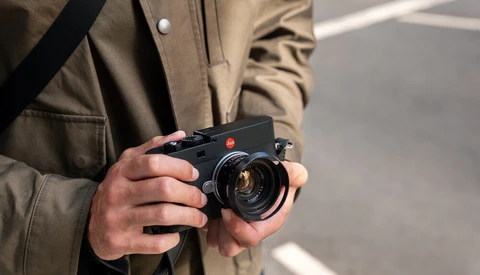
The Leica M EV1 costs $9,000. For context, you can buy a Sony a7C R for $2,999, mount any Leica M lens you want with a cheap adapter, and get in-body stabilization and objectively better specifications across the board, plus autofocus with other lenses. You'll save $6,000 in the process. So the question that Leica needs to answer is simple: what exactly are you paying for? 

The Death and Rebirth of Medium Format

There's a Hasselblad 500C/M sitting in a pawn shop somewhere, priced at a few hundred dollars, gathering dust between the guitars and the jewelry cases. Thirty years ago, that camera was a professional's most prized tool—the key to a serious career. By today's standards, it would have cost several thousand dollars when new. Ten years ago, it was an expensive paperweight.

5 Things Beginner Photographers Waste Money On (And What to Buy Instead)

Every new photographer makes the same expensive mistakes. You buy gear that looks professional, sounds essential, and promises to elevate your work. Then it sits in a drawer while you wonder why your photos still look amateur. The problem isn't your talent or dedication. The problem is that the photography industry has convinced beginners to spend money on the wrong things. 

Stop Comparing Megapixels: The Real Way to Choose Your First Camera

You've got 14 browser tabs open. Three YouTube reviewers are contradicting each other about the same camera. Your spreadsheet comparing megapixel counts, autofocus points, and ISO performance has grown to 17 columns. A credit card sits ready in your other hand.

Why Every Photographer Should Photograph the Same Place 10 Times

There's always that one unremarkable place near where you live. A street corner you pass without thinking. A park bench under a tree. An alley behind a strip mall. You've walked by it hundreds of times and never once thought to photograph it. The first time you do, the image will probably be forgettable. The tenth time will change how you see everything. 

5 More Cameras That Were Ahead of Their Time

In the first article, we explored five cameras that had the right vision but arrived at the wrong time, from Sony's Mavica prototype to the Contax N Digital. These machines predicted the future of photography but couldn't convince the market they were right. 

The 5 Lenses Every Beginner Photographer Should Try

You can read every photography tutorial ever written, watch hundreds of hours of YouTube videos, and memorize the exposure triangle until you dream about it. But nothing will teach you to see like a photographer faster than putting different glass on your camera and forcing yourself to work within its constraints. The problem is that most beginners approach lens buying all wrong.

How to Choose a Backup Camera Body That Will Actually Save Your Shoot

Your primary camera body fails during a paid shoot. Maybe the shutter mechanism seizes, the sensor starts showing hot pixels, or the battery door won't close properly. In that moment, your backup camera becomes the difference between delivering the work you promised and refunding thousands of dollars while explaining to a disappointed client why you couldn't finish the job.

The Algorithm-Proof Way to Build a Photography Audience

Last Tuesday, your Instagram Reels were getting 5,000 views each. This Tuesday, you're lucky to break 300. Nothing changed in your content quality, posting schedule, or hashtag strategy. Instagram just decided your work wasn't worth showing anymore. If you're a photographer trying to build an audience in 2025, this frustration probably feels familiar.  

Why Shooting in Difficult Conditions Makes You a Better Photographer

Perfect weather and golden hour are training wheels. Real growth happens when you're forced to shoot in harsh midday sun, overcast gloom, freezing rain, or extreme heat: conditions that expose every weakness in your technical knowledge and creative problem-solving.  

5 (In)famous Camera Recalls That Changed Industry Standards Forever

No photographer wants to hear that their expensive camera has a fundamental flaw. But some of the most catastrophic product failures in camera history, whether formal recalls or de facto recalls that forced official corrections, led to industry-wide improvements that benefit every photographer today. These weren't just embarrassing product failures.

6 Brilliant Camera Features That Digital Photography Forgot

Every time I load a memory card into my camera, I think about the satisfying mechanical click of loading a fresh roll of film. Modern digital cameras are technological marvels, packed with computational photography, eye-tracking autofocus, and in-body stabilization that would seem like science fiction to photographers of the 1990s.

5 Cameras That Were Ahead of Their Time

The history of photography is littered with brilliant ideas that arrived too early. These were cameras that promised to revolutionize the industry but were met with skepticism, confusion, or outright rejection. These weren't failures of engineering. They were failures of timing. 

Will We Eventually See Cellular Integration in Cameras?

Your camera can connect to Wi-Fi. It can pair with Bluetooth. It can talk to your phone, your computer, and your cloud storage through various cables, dongles, and apps that work half the time. But here's what it can't do natively: connect directly to cellular networks the way your phone, your tablet, your smartwatch, and even your car already can.