Photography Gear

Gear isn't everything — but it's not nothing either. This section covers the cameras, lenses, accessories, and equipment that photographers actually use, with an eye toward helping you make smart decisions rather than just chasing the latest release. Expect news, analysis, hands-on impressions, and the occasional reality check on whether that upgrade is actually worth it.

How the Canon EOS R6 Mark III Handles Speed, Light, and Focus

The Canon EOS R6 Mark III mirrorless camera has been pushed through real-world testing, from heavy rain to fast-moving wildlife, to see if it can handle serious field work. It’s built for speed and precision, and that’s exactly what matters when you’re tracking unpredictable action and can’t afford to miss a shot. 

Canon’s New 45mm f/1.2 STM Redefines What Affordable Can Mean

Canon’s new 45mm f/1.2 STM lens is making waves for all the right reasons. A full frame lens with a maximum aperture of f/1.2 for under $500 is something no one expected, and it’s about to change how you think about affordable fast primes.  

Everyday Camera, Film Pace: The Fujifilm X Half Tested

Film mode on the Fujifilm X half is more than a menu option. It locks you into a roll length, disables the rear screen, and forces you to work through an optical finder that does not hold your hand. You get the pace of film with the constraints that shape decisions on composition and timing. 

Building The World's Toughest Camera Bag

Camera bags; they're all the same, right? Well, Tenba may have changed the game by making the world's toughest soft camera bag.  

A few days ago Peter, one of the designers of these new Tenba bags, flew to Puerto Rico to share his creations with me in person.

The Rise and Fall of the Point-and-Shoot Camera

There's a 10-year-old Canon PowerShot in your parents' junk drawer. It was once a $300 piece of high technology, a marvel of miniaturized optics and digital sensors that could fit in a shirt pocket. Today, the phone in your hand takes better photos in worse lighting without you thinking about it. This is the story of how the smartphone killed the most popular camera on Earth. 

The Canon EOS C50: Compact Cinema Body, Big-Sensor Tools

Canon put 7K open gate raw, 4K at 120p without a crop, and dual-base ISO into the EOS C50, a compact cinema body that’s meant to work fast. If you balance scripted projects with social deliverables or need clean high frame rates without changing your lens plan, this release is worth a look. 

My Frustrating Experience With the Fujifilm X-E5

The Fujifilm X-E5 looks like a fantastic option on paper, essentially being a Fujifilm X100VI with interchangeable lenses. Sadly, my initial experience with the Fujifilm X-E5 left me confused by some of their design choices. 

The Viltrox AF 85mm f/2 Evo: Sharp Results, Fast AF, and a $275 Price

This affordable 85mm portrait prime changes your options with a compact build, a bright f/2 aperture, and performance that holds up on high-resolution bodies. If you photograph people or detail-rich scenes, the mix of sharpness, subject separation, and modern autofocus gives you a practical tool without the premium price tag. 

Portkeys Announces LH5C Compact On-Camera Monitor With Camera Control

Portkeys has introduced the LH5C, a compact 5.4-inch on-camera monitor with HDMI input/output and wired camera control. The monitor runs the company’s MOVNORM OS and includes a full set of monitoring tools aimed at solo operators and small crews, costing just $199. 

Canon’s RF 45mm f/1.2 STM Is a Small, Fast, and Affordable Prime Lens

Canon has introduced the Canon RF 45mm f/1.2 STM, a standard-view prime built for its RF mount cameras. The lens aims to deliver fast-aperture performance in a smaller package than typical f/1.2 options, targeting everyday stills and video work on both full frame and APS-C RF bodies. 

5 Legendary Lenses That Changed Photography Forever

Photography has been revolutionized not just by cameras, but by the glass in front of them. While cameras capture the image, it's the lens that creates it: shaping light, defining character, and determining what's even possible to photograph.

Fujifilm X-M5 Street Test: Amsterdam Morning Light

Compact bodies change how long you stay out and how quickly you respond to action. The Fujifilm X-M5 mirrorless camera pushes you to chase color and mood straight out of the camera, which matters when you want results without a heavy edit session. 

10 Amazingly Affordable Sony-Compatible Lenses Worth Buying

Sony's G Master lenses are spectacular, but they'll empty your wallet quickly. Many G Master lenses cost $2,000 or more, with flagship zooms pushing $3,000 or beyond. The good news? Third party manufacturers and Sony's own value-focused designs have created professional grade optics at prices that seemed impossible just years ago. 

Stop Using a Wide Angle Lens for Landscape Photography

You may be reaching for the wrong glass to capture those stunning landscapes, trading intentional composition for uninspired vastness. Let's discuss why swapping out your go-to wide angle lens for a telephoto or mid-range lens could be the secret to creating truly compelling, focused photography. 

Is This the One-Lens Travel Upgrade You’ve Been Waiting For?

All-in-one zooms live or die by trade-offs, and stretching to 25mm on the wide end without giving up too much elsewhere is a big ask. If you travel light or want a single lens for walkaround work, this one targets that with a wider start, faster focus, and smarter controls than the first-gen version. 

Panasonic Lumix S 100-500mm f/5-7.1 Lens Review

For the last month, I’ve been deep in the world of ultra-telephoto lenses for Sony full-frame cameras, testing some of the most advanced glass money can buy. But can Panasonic's new 100–500mm f/5–7.1 lens, for a fraction of the price, compete? Surprisingly, it can.  

An Ultra-Wide Zoom on a Budget With One Quirk

You’re looking for a compact ultra-wide zoom that stays small, takes front filters, and still promises strong sharpness. If you shoot interiors, real estate, or city nights, take a look at this option. 

How Even a Cheap Lens Can Produce Great Photos

Concerts force you to work in low light with unpredictable motion and strict seating, which makes reach, stability, and restraint matter more than price. This video shows how a cheap tele zoom can handle a concert and still deliver lifelike results that many photographers assume require pro glass. 

Can Micro Four Thirds Compete With Full Frame? Testing the OM System 50-200mm f/2.8

For years, I've heard the same argument repeated over and over: micro four thirds cameras just aren't professional enough. The shallow depth of field can't compete, the image quality falls short, and serious photographers should stick with full frame sensors. Honestly, I didn't know if this claim was true or just internet chatter.

Why Your First Lens Matters More Than Your First Camera

Walk into any camera store with $1,500 to spend, and you'll likely walk out with a $1,200 camera body and a $200 kit lens. It's the default package that manufacturers bundle together, and it seems logical enough. After all, the camera is the brain of the operation, right? The body has all those megapixels, the fancy autofocus system, the brand name emblazoned on the front.

5 Workflow Mistakes That Kill the Creative Flow and How to Avoid Them

We all know the feeling when a shoot is going perfectly, your model is nailing the poses, and then something goes wrong. Maybe a light fails, a cable gets unplugged, or your tether connection drops mid-shoot. Suddenly, the creative flow evaporates, and you’re scrambling to regroup. 

Push Past 1:1 With Sony’s 100mm Macro GM Lens

Sony’s new 1.4x macro lens changes how close you can get without adapters or cropping. That jump matters when you want texture-level detail and clean working distance while keeping handling familiar. 

Pentax Bet Everything on Photographers Coming Back to DSLRs. Now What?

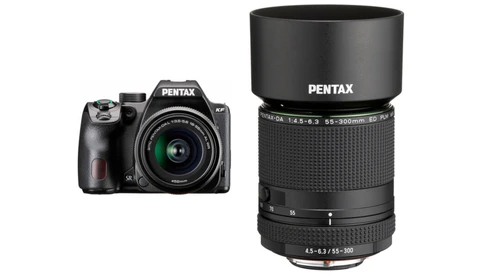
In 2019, while every other camera manufacturer was embroiled in the race to develop mirrorless systems, a Ricoh executive said something truly remarkable: "After one or two years, some users who changed their system from DSLR to mirrorless come back to the DSLR again." He went further, predicting that "the DSLR market is currently decreasing a little bit, but one year or two years or three year

The Patent War That Changed Photography Forever

In 1976, Kodak made what seemed like a smart business decision. Polaroid had dominated instant photography for decades, and consumers clearly wanted the technology. Kodak had the manufacturing scale, the distribution network, and the engineering talent to compete. They released their EK series instant cameras and started selling film. Within months, Polaroid sued them for patent infringement.

A 100-Megapixel Throwback Camera With Modern Tricks

A tiny medium format box that turns heads sounds like a contradiction, yet this one does exactly that with a 100-megapixel sensor inside a body that looks like a relic in the best way. You get the look and feel of classic gear with sharp, modern files and a modular approach that has a different rhythm than the usual full frame workhorse. 

Why This Modern Hasselblad Feels Like Shooting Film

Design that pulls a film-era shooting posture into a modern body changes how you work from the first frame. If you chase detail and prefer to slow down, this camera forces intention at the point of capture without the usual digital shortcuts. 

Why This Used Camera Refuses to Fade

Canon’s early full frame bodies still spark debate, and one that keeps resurfacing is the Canon EOS 6D from 2012. You see it pop up in bargain listings, you wonder if that cheap full frame path is a smart move, and this time, there’s real history baked into the story. 

Fstoppers Reviews the Insta360 GO Ultra: It’s Right There, in the Name

Action cameras are a tough sell these days. They’re in a category that’s being squeezed from above by 360 cameras that largely duplicate their functions, and smartphones that perform similar functions and are always with you. So where does that leave the Insta360 GO Ultra? 

Panasonic Lumix S 24-60mm f/2.8 vs Sigma 24-70mm f/2.8: The Real Differences

The Panasonic Lumix S 24-60mm f/2.8 promises f/2.8 performance in a smaller package, but does trimming 10mm from the standard zoom range actually matter? Its direct competitor, the Sigma 24-70mm f/2.8 DG DN II Art, offers that extra reach plus features like a manual aperture ring, yet the Panasonic undercuts it by $400. 

Modern Mirrorless Battle: Panasonic S1R II vs Sony a7R V

Two cameras promise huge files and flexible video without forcing you into a cinema body. If you care about cropping room for wildlife and clean oversampled footage in one rig, this comparison hits the sweet spot. 

3 Camera Technologies That Died Before They Should Have

Not every brilliant camera technology dies because it's flawed. Sometimes innovations vanish because the market couldn't support their development, manufacturers chose cheaper alternatives, or the industry simply moved on before the technology reached its full potential. Here are three examples of camera technologies that deserved better fates than they received. 

Stop Letting Memories Die On Your Phone With Wide Prints

Instant prints change the energy in a room and turn quick snaps into keepsakes you can pass around. A hybrid instant camera that lets you shoot, tweak, and print on the spot gives that feeling back without trapping memories on a phone you’ll never scroll again. 

Pick the Right 35mm Lens: Sharpness, Bokeh, and Speed Compared

Three fast 35mm primes on Sony E go head to head here, with clear tradeoffs in size, speed, and polish. If you shoot events, portraits, or street, the choice affects autofocus behavior, close-up reach, and how clean your backgrounds look at wide apertures. 

The Camera Feature We Never Talk About

The viewfinder isn't just how you see before shooting. It's how you think. Every viewing technology, from ground glass to electronic viewfinders, created a different kind of photographer with a different way of seeing. Some compositions only exist because of how the photographer had to look at the world through their particular viewfinder.

Hidden Camera Features You Probably Forgot to Use

Every camera hides tools that quietly transform your photos. You might use them every day without realizing what they actually do or never notice them buried in your menu. These features aren’t just for advanced shooters. They’re there to make your work more consistent, sharper, and cleaner right out of the camera.