Landscape Photography

Landscape photography rewards patience, planning, and a willingness to be in the right place at the right time — which is harder than it sounds. This section covers the full landscape photography workflow: scouting locations, reading light, choosing the right filters and focal lengths, managing long exposures, and processing raw files to reflect what you actually saw and felt when you pressed the shutter.

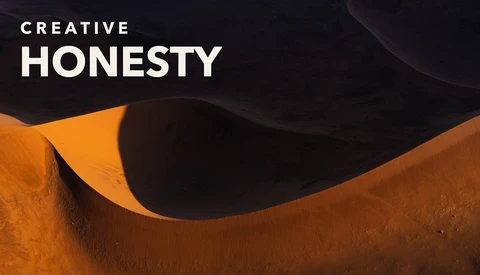
Less is More: The Power of Simplicity in Landscape Photography

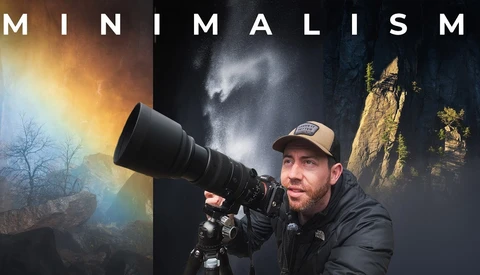
Discover the art of minimalism in landscape photography and learn how the deliberate removal of distractions can elevate your images. Join me as I share insights from my recent trip to Namibia, highlighting the beauty and purpose behind each frame.

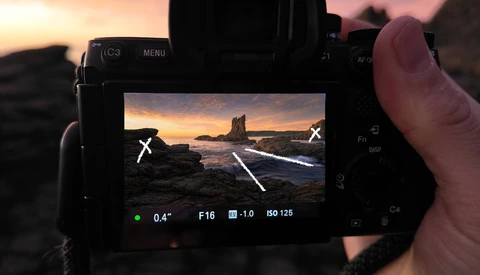
7 Steps to Better Minimalist Landscape Photos

Minimalist landscape photography is one of the hardest styles to pull off well. Strip away too much and the image feels empty; leave too much in and you've lost the point entirely.

New Topographics in the Age of Permanent Change

Look around any expanding city today. Warehouses rise where fields stood five years ago. Housing developments stretch toward dry hills. Highways carve through fragile terrain. Data centers replace factories. The landscape is no longer something we visit. It is something we continuously build, erase, and rebuild. It is progress, they say.

9 Things That Go Wrong on Every Landscape Photography Trip and What to Do About Each One

Landscape photography looks serene from the outside. A lone figure on a hillside, tripod silhouetted against a sunrise, communing with nature. What the Instagram post does not show is the two-hour predawn drive, the boots soaked through before the first frame, the sky that refused to cooperate, and the 200 exposures that produced three usable images. Landscape photography is not a passive activity. It is an ongoing negotiation with an environment that does not care about your shot list.

One Desert Location, Three Different Days, Completely Different Images

Shooting the same desert location across multiple days and radically different conditions is one of the best ways to push your landscape work forward. This Arizona desert shoot is a masterclass in staying adaptable, and the images prove that preparation and flexibility matter far more than waiting for the perfect moment.

Elevate Color From an Element of Your Photos to the Subject

Understanding how to use color as the subject of your photos can turn a pleasing composition into one that stops people in their tracks. In this video, Alex Kilbee breaks down a few viewer-submitted photos to explain why they work and how you can use the same principles to improve your images.

Focus Stacking: Tack-Sharp Images From Front to Back

Achieving tack-sharp landscape images from foreground to background is one of the more technically demanding challenges in the field. Focus stacking solves it, and it's more accessible than most people assume.

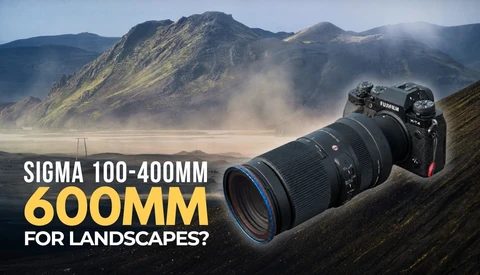
Landscapes at 600mm? Why a Long Lens Is the Right Decision Sometimes

Telephoto lenses have fundamentally changed what's possible in landscape photography, letting you isolate distant peaks, compress atmospheric mist, and capture moments that a standard wide angle setup would miss entirely. The Eastern Sierra Nevada is one of the most dramatic proving grounds for that kind of shooting, and getting it right means being fast, adaptable, and a little stubborn.

Behind the Scenes: How I Photographed Panoramas in Joshua Tree

Take a peek behind the scenes at how I created several enormous, detailed night panoramas in Joshua Tree National Park. The surreal landscapes are perfect for this sort of work. Below, I'll walk through the process, gear, and a few discoveries that make panoramas better.

How to Find and Frame Epic Sunset Light Before It Happens

Great light isn't random. After 15 years of landscape photography, William Patino makes the case that almost none of his best work has come down to luck. It comes down to reading the sky, understanding cloud behavior, and knowing exactly what to do once conditions start to break your way.

Let Your Creativity Bloom: Cover the Washington, D.C. Cherry Blossom Festival Like a Pro

Every year, the cherry blossom trees around the Tidal Basin and throughout D.C. bloom in a spectacular display of pink and white petals. These annual events provide an opportunity to create stunning landscapes and captivating portraits. In preparation for this year's National Cherry Blossom Festival, here are some tips and tricks to help get you up to speed on where to get the best shots and when to shoot.

Why Your Raw Files Look Nothing Like the Real Thing

Flat raw files after a stunning rainbow shoot are one of the most deflating moments in landscape photography. What you saw in the field and what your camera recorded are two different things, and knowing how to close that gap is a skill worth building.

Why Your Technically Perfect Landscape Photos Still Feel Empty

Photography is currently undergoing a crisis of distinctiveness. Landscape photography, in particular, falls victim to mediocrity: a convergence toward a homogenized aesthetic. In today’s world, where algorithms reward consistency over unique culture, the cookie-cutter approach to landscape photography has become a currency rather than an art form.

The Camera Is a Shield: Why True Creativity Requires Uncomfortable Solitude

You close the car door, and then it hits you like a stealthy ton of bricks: silence. I don't know about you, but for me, when I am in the throes of such profound silence, an unacknowledged sense of anxiety starts to creep in. It is the undeniable truth that, even with a camera in hand, I am alone.

Here’s One Thing Landscape Photographers Shouldn’t Leave Home Without

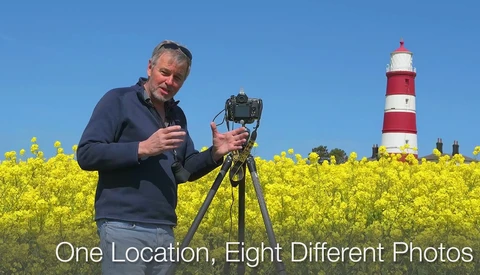
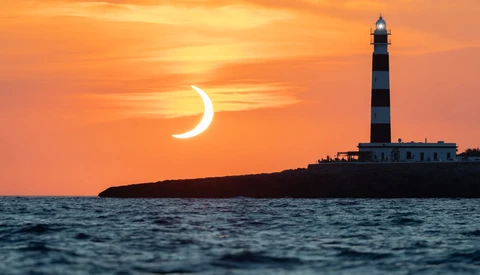
I love sitting outside with my camera on a tripod, catching a scenic view of the sunrise or sunset over a great landscape (usually with a lighthouse included). While great photos are always the goal, there's one tool that can help you with a side quest that you perhaps hadn't thought of.

Stuck in a Photography Slump? Watch This

Motivation drops off. You start checking the forecast, see blue skies, and decide it’s not worth heading out. That habit costs more than you think.

Focus Stacking Landscapes: A Step-by-Step Guide

Focus stacking lets you create a landscape image that’s sharp from the closest rock to the distant horizon. When you shoot wide scenes at f/11 or f/16, you still won’t always get everything crisp, and that soft foreground can quietly ruin an otherwise strong frame.

What Really Happens to Waves as You Change Shutter Speed

Over the years, seascape photography has become the area of my work where shutter speed decisions matter most. Waves never repeat themselves, and small changes in exposure time can completely alter how water behaves in an image. A fraction of a second can preserve structure and texture, while a longer exposure can simplify the scene and emphasize static elements. Learning how shutter speed affects water is one of the most important technical skills in coastal photography.

The 2026 Superblooms Are Here. Don't Be the Photographer Who Ruins Them.

Death Valley National Park declared an above-average bloom year on February 22, and park officials are warming up to the word nobody wants to use prematurely: superbloom. The last time the park saw a display at this scale was 2016, a full decade ago. Unusually heavy rainfall in late 2025 (the Furnace Creek Visitor Center area recorded roughly 2.4 inches between November and early winter alone, far more than the park typically receives during those months) soaked deep into desert soils that had been waiting for exactly this kind of event. The result is miles of desert gold, brown-eyed evening primrose, sand verbena, and phacelia carpeting valley floors and alluvial fans that were bare rock and sand six months ago.

A Practical Blue Hour Workflow for Landscape Photographers

The Fujifilm GFX50S II can turn a familiar coastal village into something sharp, calm, and deliberate at blue hour. When light and artificial glow have to balance perfectly, small decisions with lens choice and composition carry real weight.

10 Ways to Make Wide Angle Woodland Photography Work in Winter

What do you do when you're planning a shoot in the woodlands during winter, but you live in a region that doesn't see much snow or fog? You walk for hours in this unforgiving environment, trying to find a decent composition, and you end up feeling frustrated that nothing is working.

Building a Photography Workflow That Actually Helps You in the Field

A photography workflow is simply a repeatable way of working. It covers how you prepare, how you shoot, and how you deal with your images afterward. In landscape photography, where light, weather, and access are often limited, having a workflow removes uncertainty and prevents small mistakes from becoming lost opportunities.

Brutal Wind, Beautiful Photos

Heading out with a camera in heavy rain feels reckless, especially near the coast with wind strong enough to shake a tripod. Yet those are the days when light turns moody, water comes alive, and ordinary locations shift into something raw and dramatic.

Sky Replacements Didn’t Ruin Landscape Photography: This Argument Ruined It

Uh oh. A conversation about AI in photography? Let the witch hunt begin. We all know that AI is rapidly becoming a dominant and controversial topic in our industry. I am not here to proclaim one way or another, but simply to open a dialogue between the technical modernization of art and, of course, the purism of the art form.

Why Waterfall Photos Fail and How to Fix Them

Waterfall scenes look simple, but they fall apart fast when the eye has nowhere to go. If you want stronger landscape images, you need to think beyond the obvious front-on shot and start controlling flow, balance, and shutter speed.

Stop Shooting Down at Flowers: A Better Angle

Snowdrops demand precision in a way that most woodland flowers do not. Miss the timing by a week and the petals brown at the edges, flattening the very detail you set out to capture.

Stop Shooting the Obvious: A Different Way to Photograph

Places like Bamburgh Castle and coastal landmarks like it get photographed thousands of times a year, usually from the same spot with the same treatment. If you keep shooting the obvious angle, your work blends into that pile whether you mean it to or not.

Why You Should Stop at the Locations You Pass Most Often

There is a habit many of us landscape photographers develop without realizing it. We drive past locations we know well, places we have seen dozens of times, and we tell ourselves we will stop another day. The light is not right. The weather is poor. We are on our way somewhere else. Over time, these familiar places become invisible. They are no longer considered options, only background. This is a mistake, and one that limits growth more than most of us care to admit.

Three Tricks to Make More Interesting Photos of Lighthouses

I have a strange obsession with photographing lighthouses. They have a way of making a landscape that much more interesting, and I often find myself taking a road trip just to photograph one. Here are a few tips to help make your photos stand out from the scores of other tourists making the same images. 

Fixing a Wide Angle Landscape When 14mm Is All You Have

Shooting a landscape with only a 14mm lens can leave you stuck with too much foreground and not enough subject. When the light is right but the lens is wrong, the choices you make in editing decide whether the photo survives at all.

How to Compose Big Landscapes Without Overthinking It

Big landscape scenes fall apart fast if the foreground, light, and framing are not controlled together. When you’re working near water and mountains at sunrise, small choices decide whether the scene feels intentional or scattered.

The 5-Step Landscape System That Stops You From Missing Shots

You can hike all day, reach a location with a clean view, and still walk away with nothing because you rushed the setup. This video is about building a repeatable process so the light doesn’t decide whether you get a usable frame.

Photography Isn’t About the Camera — It’s About Learning How to See

“Wow, what an amazing photograph. What camera do you use?” “I really love your photographs; you must have a very expensive camera.” “Gee, thanks. I use a very old, outdated camera system that’s not very expensive at all.” Let's talk about gear and how it doesn't make you a better photographer.
Stop Waiting for the “Right” Camera and Start Getting Better Results

Lightroom Classic can either become the place where your landscape work stays alive for years, or the thing you install after you have already lost track of it. The video lays out a few mistakes that feel small in the moment, then show up later as missing files, wasted trips, and slow progress.